 Ultimate guide
How to Cut HVAC Energy Bills With an Efficient System
Last Updated: November 22, 2026
Quick Summary
An efficient HVAC system lowers your bills because it delivers the same heating and cooling using less electricity or gas. Variable-speed equipment runs longer at lower output, avoiding the short cycling that wastes energy, while proper sizing, sound ducts, and regular maintenance keep those savings real.
- Higher SEER2, HSPF2, or AFUE ratings mean less energy used per unit of heating or cooling delivered.
- An oversized unit short-cycles and can underperform a correctly sized one, even with an excellent rating.
- Compare quotes using a load calculation, itemized scope, and the AHRI reference number.
- Check rebate eligibility before purchasing, since some utility rebates must be reserved before installation.
- Normalize savings with degree days before judging whether a new system performed as modeled.
Table of Contents
- Why an Energy Efficient HVAC System Lowers Your Operating Costs
- Comfort, Humidity Control, and Indoor Air Quality Benefits
- Reading SEER2, HSPF2, and AFUE Ratings Without Guesswork
- HVAC Upgrade Cost, Rebates, and Payback Period
- Estimating Your Savings With an HVAC Energy Savings Calculator
- Maintenance for HVAC Systems That Keeps Efficiency Up
- Is Your 20-Year-Old AC Unit Worth Replacing With a New One?
- Frequently Asked Questions
Why an Energy Efficient HVAC System Lowers Your Operating Costs
Energy-efficient HVAC systems cut utility bills because they move the same heat using less electricity or gas. Homeowners often focus on purchase price and overlook operating cost, where much of the money goes over a system's lifespan.
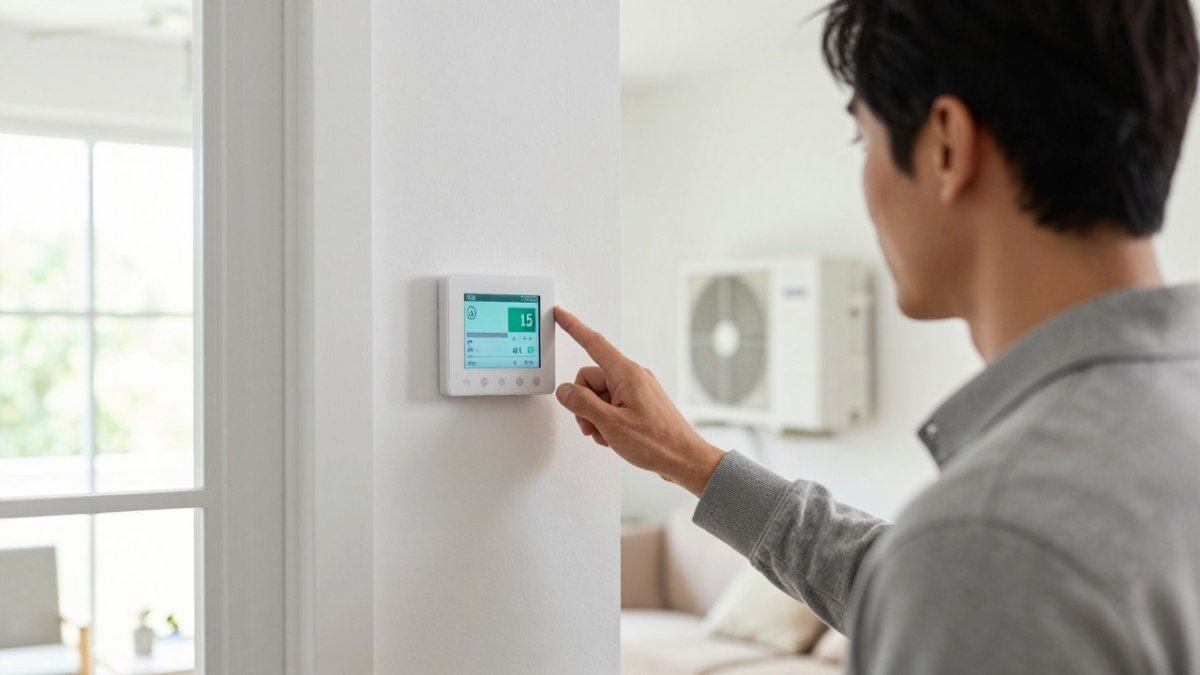
Efficiency is measured with ratings, and higher ratings mean less energy consumed per unit of heating or cooling delivered. The U.S. Department of Energy guidance on heating and cooling efficiency explains how these ratings translate into real energy use. Variable-speed compressors and fans are the main reason newer systems run longer at lower output, which avoids the short cycling that wastes energy in older equipment.
Older equipment can lose efficiency gradually through worn components, refrigerant issues, and duct leaks, often without the homeowner noticing until bills climb. A system running continuously at reduced capacity can outperform an older unit cycling at full power.
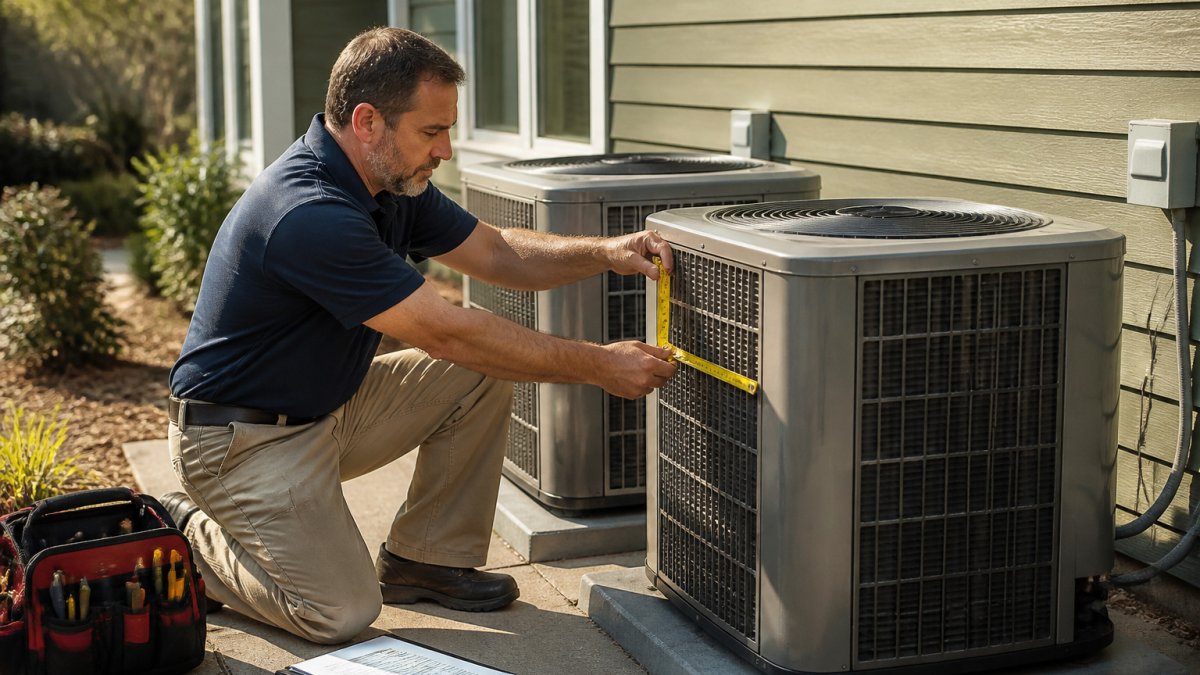
Watch out: sizing matters as much as the rating. An oversized unit short-cycles and can deliver less comfort and efficiency than a correctly sized one, even if its rating is excellent.
Comfort, Humidity Control, and Indoor Air Quality Benefits
A well-matched efficient system keeps temperatures steady room to room, not just at the thermostat. Consistent run times eliminate hot and cold spots that prompt people to crank the setpoint, so efficient systems feel more comfortable at the same setting.
Humidity is the most often missed factor. Air conditioners remove moisture as they cool, but a short-cycling system stops before it dehumidifies properly, leaving the house clammy. Variable-speed equipment runs longer at lower output, pulling more moisture from the air.
Air quality depends on filtration and ventilation. Higher-efficiency filters capture finer airborne particles, but they also add static pressure, so the system must be designed to handle them. Ask your installer whether the blower and ductwork can support the filter you plan to use.
Reading SEER2, HSPF2, and AFUE Ratings Without Guesswork
Three ratings cover most residential equipment. SEER2 measures cooling efficiency for air conditioners and heat pumps over a typical cooling season, HSPF2 measures heating efficiency for heat pumps, and AFUE measures how much fuel a furnace converts to usable heat. Higher numbers mean better efficiency in every case.
A common mistake is comparing ratings across equipment types. AFUE and HSPF2 are not measured the same way, so compare like with like: between two heat pumps, higher SEER2 is the better cooling number and higher HSPF2 the better heating number.
Ratings describe the equipment in lab conditions. Installation quality, ductwork condition, and how the system is sized determine what you actually get in your home. A high-rated unit installed with leaky ducts can perform worse than a mid-range unit installed properly.
HVAC Upgrade Cost, Rebates, and Payback Period
Upgrade cost is the sum of equipment, labor, any ductwork or electrical work, permit fees, and disposal.
A useful way to compare quotes is to separate them into four buckets: equipment and materials, installation labor, ancillary work (duct sealing, electrical, permits, thermostat), and post-install services such as commissioning and the first-year maintenance visit. Ask each contractor to break the quote out this way. A low headline price that omits duct sealing or a proper load calculation is not a lower cost; it is a deferred cost that shows up as comfort complaints and higher bills.
Rebates and tax credits reduce net cost, but they are conditional and time-limited. The U.S.
Watch out: some utility rebates must be reserved before installation, so confirm eligibility before you sign.
Payback period is the extra cost of the higher-efficiency option divided by the annual energy savings it produces. Get the installed cost of the baseline and high-efficiency units from the same contractor so the difference reflects equipment and required ancillary work, not a different scope.
A simple illustration of the math, using placeholder figures you replace with your own: divide the extra installed cost of the higher-efficiency option by the annual savings you model at your rates.
Total cost of ownership is the fuller comparison: add purchase and installation, routine maintenance over the expected service life, likely repair costs, and energy cost, then subtract incentives.
Before you commit, ask for the load calculation (Manual J or equivalent), the model numbers on the quote, and the AHRI reference number so you can verify the efficiency rating and the rebate eligibility. A quote that cannot produce those is not ready to compare.
Estimating Your Savings With an HVAC Energy Savings Calculator
Most online calculators ask for the efficiency rating of your current and proposed systems, your annual heating and cooling energy use, and your local energy rate.
Start with your bills, not the calculator. Pull twelve months of utility statements and separate heating and cooling months from mild months. The mild-month baseline, when neither runs much, represents your non-HVAC load: water heating, appliances, lighting, and plug loads.
The method is the point: estimate cooling and heating energy use from your own bills, apply the efficiency ratio between your current and proposed systems, multiply by your rate, add the two for modeled annual savings, then divide the incremental installed cost by that figure for payback.
Calculators generally assume typical weather, typical thermostat behavior, and reasonably sound ducts. A home with leaky ducts, an oversized unit, or a thermostat that is never programmed will diverge from the model.
Measuring actual savings after the upgrade is the step almost no one documents, and it is where you find out whether the model held. Use a before-and-after checklist:
- Record twelve months of pre-upgrade bills with the rate per unit and billing-period dates.
- Note outdoor temperature data for the same periods from a local weather source, so you can compare heating and cooling degree days, not just raw usage.
- After installation, collect the same twelve months of bills and degree-day data.
- Compare usage per degree day, not total usage, so a milder or harsher year is not mistaken for equipment performance.
- Separate fixed charges from volumetric charges, since only the volumetric portion moves with efficiency.
- Keep the commissioning report and model numbers, so any gap between modeled and actual savings can be traced to sizing, duct leakage, or setup rather than blamed on the equipment.
Watch out: comparing a mild post-install year to a severe pre-install year will make almost any new system look better than it is. Normalize with degree days before drawing conclusions.
If actual savings fall well short of the model, the usual causes are duct leakage, incorrect refrigerant charge, a mismatched indoor coil, or sizing without a load calculation. These are commissioning and installation issues, not rating issues, and are worth raising with the installer while the work is under warranty.
Maintenance for HVAC Systems That Keeps Efficiency Up
Efficiency erodes without maintenance. Dirty coils, low refrigerant, clogged filters, and worn belts all force the system to work harder for the same output. Scheduled service catches these problems before they show up on your bill.
Spring tune-ups are the most useful visit for most systems. A technician should clean the coil, verify refrigerant levels, check electrical connections, and test airflow. You can book a spring AC preventative maintenance visit that covers these checks and includes a written condition report.
A common mistake is skipping the filter. Replace or clean filters on the schedule the manufacturer specifies, and more often in homes with pets or during heavy use. ENERGY STAR guidance on maintaining heating and cooling equipment outlines the basic maintenance steps homeowners can handle themselves.
Your maintenance schedule should match your system type and usage. Most homeowners benefit from a professional check once or twice a year, with filter changes between visits. Our guide to how often each part of your HVAC system should be serviced breaks down the schedule.
Is Your 20-Year-Old AC Unit Worth Replacing With a New One?
A 20-year-old air conditioner is usually past its expected service life, and the decision depends on repair costs and efficiency. Our warning signs that your HVAC system has reached end of life cover what to check before deciding.
Repair or replace? Replace if a major component fails, if repairs are adding up, or if the system struggles with comfort or humidity. Repair if the problem is isolated, the rest of the unit is sound, and the system is otherwise performing well.
Many homeowners underestimate how much a new efficient system can save. Compare your current bills with the expected savings from a newer unit, and factor in rebates and the reduced risk of a sudden failure during peak season. A written quote from a licensed contractor will show the true cost of each option.
If you are weighing replacement, U.S. Department of Energy guide to choosing heating and cooling equipment is a useful starting point. For a site assessment and a clear comparison of repair versus replacement, book a consultation with Valley View HVAC.
| Upgrade Factor | What to Check | Why It Matters |
|---|---|---|
| Efficiency rating | SEER2, HSPF2, or AFUE | Sets operating cost |
| System sizing | Load calculation | Avoids short cycling |
| Ductwork condition | Leaks and insulation | Affects real-world efficiency |
| Rebates | Federal and utility programs | Lowers net cost |
| Maintenance schedule | Spring and fall service | Preserves efficiency |
Valley View HVAC installs and services high-efficiency heating and cooling systems across the Willamette Valley, backed by a 2-year workmanship warranty and a fully licensed, bonded, and insured team. If your system is aging or your bills keep climbing, we can assess your home and give you a written comparison of your options.
Frequently Asked Questions
Is high-efficiency HVAC worth it?
It depends on how many hours your system runs, your current energy bills, and how long you plan to stay in the home. Systems with higher SEER2 and HSPF2 ratings use less electricity or fuel for the same heating and cooling output, so savings accumulate most in homes with long cooling seasons or cold winters. Compare the upgrade cost against your estimated annual savings to calculate a simple payback period. Check current federal and utility incentives before deciding, since rebates can shorten that payback considerably. Valley View HVAC can walk you through the numbers for your home; pricing depends on equipment, home size, and installation requirements, so request a quote from our website for current figures.
Is there a tax credit for energy-efficient HVAC?
Federal tax credits for qualifying energy-efficient heating and cooling equipment have changed over time, so verify eligibility for the current tax year with the IRS or a tax professional before purchasing. Many utilities and state programs also offer rebates for high-efficiency heat pumps, air conditioners, and furnaces. Qualifying often depends on the equipment's certified efficiency ratings and proper installation. Keep your equipment specifications and invoices, because most credits and rebates require documentation.
Will a new HVAC system lower my electric bill?
A new, right-sized, high-efficiency system typically uses less electricity than an aging unit to deliver the same comfort, which can lower monthly cooling and heating costs. Results vary with insulation, ductwork condition, thermostat settings, and local climate. An oversized system can short-cycle and waste energy, so proper sizing matters as much as the rating. Ask your installer for a load calculation and compare the new system's efficiency rating against your current unit's.
How often should an HVAC system be maintained to keep it efficient?
Most systems benefit from professional maintenance at least once a year, with a tune-up for cooling before summer and heating before winter. Regular service includes cleaning coils, checking refrigerant levels, inspecting electrical connections, and testing airflow, all of which help the system run at its rated efficiency. Replace or clean air filters every one to three months depending on use and pets. Schedule your complimentary consultation with Valley View HVAC for guidance on servicing your system and home.