 how-to
How Often Should You Maintain Your HVAC System?
Last Updated: October 28, 2026
Quick Summary
An hvac maintenance checklist for homeowners covers monthly tasks like replacing the air filter, clearing vents and the outdoor unit, and checking thermostat settings. Most of these tasks need no tools, while a professional tune-up covers coils, refrigerant, and safety controls.
- Check and replace the air filter monthly during heavy-use seasons.
- Keep at least two feet of open space around the outdoor unit.
- Confirm thermostat mode and schedule match how you live.
- Schedule a professional tune-up each spring or fall.
- Call a technician for short-cycling, water pooling, or a burning smell.
Table of Contents
- HVAC Maintenance Checklist for Homeowners: What Each Task Does
- Monthly HVAC Maintenance Tasks You Can Do Yourself
- Home HVAC Air Filter Replacement: Size, MERV Rating and Timing
- HVAC Maintenance Checklist by Season
- HVAC Tune-Up Checklist: What a Professional Visit Should Cover
- Safety Limits and When to Call a Licensed HVAC Technician
- Booking Your First Valley View HVAC Maintenance Visit
- Frequently Asked Questions
HVAC Maintenance Checklist for Homeowners: What Each Task Does
Most homeowners only think about their HVAC system when it stops working. An hvac maintenance checklist for homeowners turns small, regular tasks into a habit. A few minutes of care each month can help homeowners maintain their HVAC systems.
An HVAC system heats, cools, and moves air through your home. It usually includes a furnace or heat pump, an air conditioner or outdoor condenser, the indoor evaporator coil, a thermostat, and ductwork.
Each task on a good checklist does one specific job:
- Replacing the air filter keeps dust off the coils and airflow steady.
- Clearing the outdoor unit lets it pull in enough air to cool well.
- Checking the thermostat confirms the system runs on the schedule you set.
- Clearing supply vents and return registers stops rooms from getting too hot or cold.
- Draining the condensate line prevents water leaks and mold growth.
- Inspecting ductwork finds leaks that waste energy and raise your bills.
No single task fixes everything; the checklist works because it covers the whole system on a schedule.
Monthly HVAC Maintenance Tasks You Can Do Yourself
Some hvac maintenance checklist items need no tools beyond a flashlight. Do these monthly during heavy-use seasons.
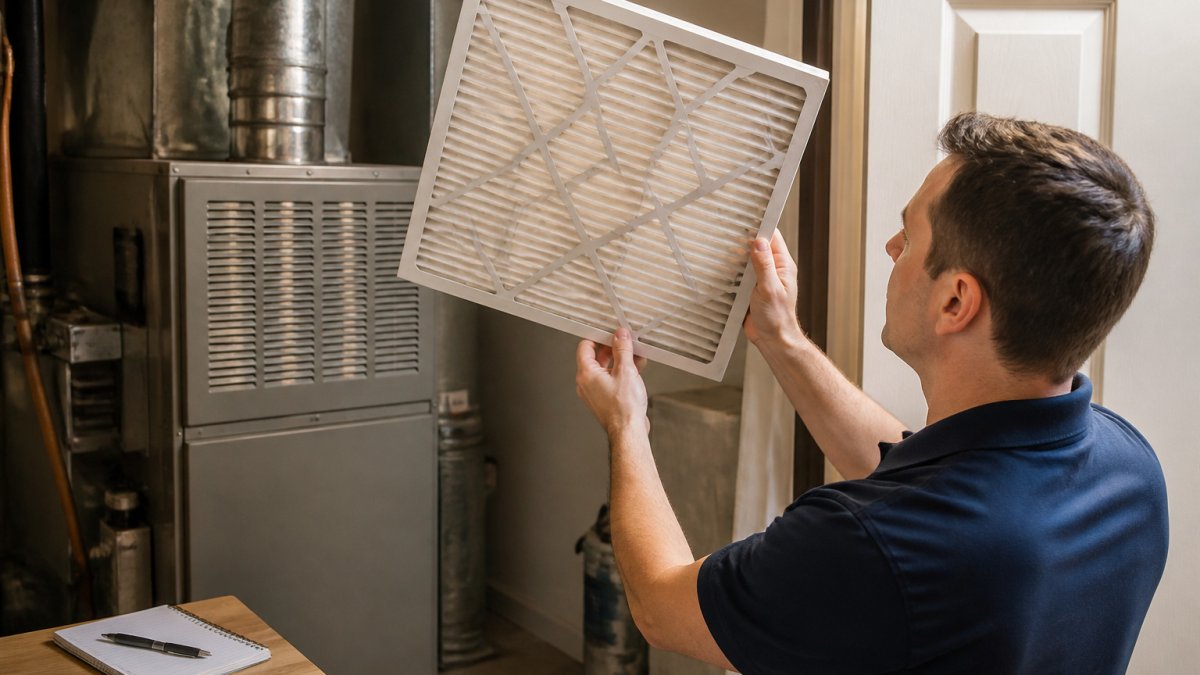
Start with the air filter: hold it up to a light, and replace it if you can't see through. Then check that every supply vent and return register is open and free of furniture, rugs, and drapes.
Outside, clear leaves, grass clippings, and debris from the condenser, keeping at least two feet of open space and trimming crowding plants. Finally, confirm the thermostat mode and schedule match how you live.
Quick monthly routine: Check filter, clear vents, clear outdoor unit, confirm thermostat settings.
Do not open the furnace cabinet, touch the blower, or attempt electrical repairs.
Home HVAC Air Filter Replacement: Size, MERV Rating and Timing
Filter size is printed on the frame, usually as three numbers such as 16x25x1. Buy the exact size your system requires, and check that the airflow arrow faces the blower.
The MERV rating measures particle capture. Check your manual before choosing a filter.
Timing depends on your household. Check your system manual for filter replacement guidance.
A common mistake is buying a cheap filter and forgetting it. Write the install date on the frame, or set a phone reminder for the next change.
HVAC Maintenance Checklist by Season
A seasonal checklist can be tied to a calendar. The schedule below splits tasks by month and system type.
Month-by-Month Maintenance Calendar
| Month | Primary tasks | Frequency |
|---|---|---|
| January | Check filter; confirm heat mode and setpoint; test carbon monoxide and smoke detectors; clear snow or ice from outdoor unit | Filter monthly; detectors monthly |
| February | Inspect condensate line for ice or blockage; check supply vents and returns for obstruction | Monthly |
| March | Schedule spring professional tune-up; clean outdoor condenser fins; replace filter | Annual tune-up; filter every 30-90 days |
| April | Confirm cooling mode responds; test thermostat schedule; clear two feet of clearance around outdoor unit | Monthly |
| May | Flush condensate drain; inspect ductwork accessible joints for leaks; check outdoor disconnect | Monthly |
| June | Replace filter before peak cooling; verify airflow at each register; check for water near air handler | Filter monthly in heavy use |
| July | Recheck filter; listen for short cycling; compare utility use to prior year | Monthly |
| August | Clean condenser coils if dusty; confirm thermostat holds setpoint; inspect outdoor unit for debris | Monthly |
| September | Schedule fall professional tune-up; switch thermostat to heat and confirm response; replace filter | Annual tune-up; filter every 30-90 days |
| October | Test heat cycle; check furnace area for storage; inspect flue and venting for blockage | Monthly |
| November | Replace filter; confirm carbon monoxide detectors; check for unusual odors at registers | Monthly |
| December | Clear outdoor unit of leaves and snow; verify thermostat schedule for holiday setbacks; log all service dates | Monthly |
Spring and Summer Cooling Checks
Before the first hot stretch, check your system manual for guidance on outdoor-unit and condensate-line maintenance. Confirm the thermostat is set to cool and responds when you raise the setpoint.
Watch for warm air from vents, a unit that runs without shutting off, or water near the indoor air handler. Those symptoms mean it's time to call a professional.
Fall and Winter Heating Checks
Before cold weather, switch the thermostat to heat and confirm the furnace or heat pump responds. Replace the filter, since heating season pulls more air through the system, and clear storage from around the outdoor unit and indoor furnace.
System-Specific Frequency Notes
- Central air conditioner: filter every 30-90 days; professional tune-up annually in spring; condenser rinse monthly during pollen season.
- Gas furnace: filter every 30-90 days; professional tune-up annually in fall; flue inspection annually.
- Heat pump: filter every 30-90 days; professional tune-up twice yearly (spring and fall); outdoor coil rinse monthly.
- Ductless mini-split: indoor filter rinse every two to four weeks; professional coil cleaning annually; drain check monthly.
Log each completed task so you can see the pattern across the year.
Schedule your complimentary consultation →
HVAC Tune-Up Checklist: What a Professional Visit Should Cover
A monthly checklist cannot replace professional service. The scope below lists system-specific items and readings to discuss with a qualified professional.
What a Technician Should Inspect by System
Central air conditioner
- Clean evaporator and condenser coils
- Check refrigerant charge and subcooling/superheat readings
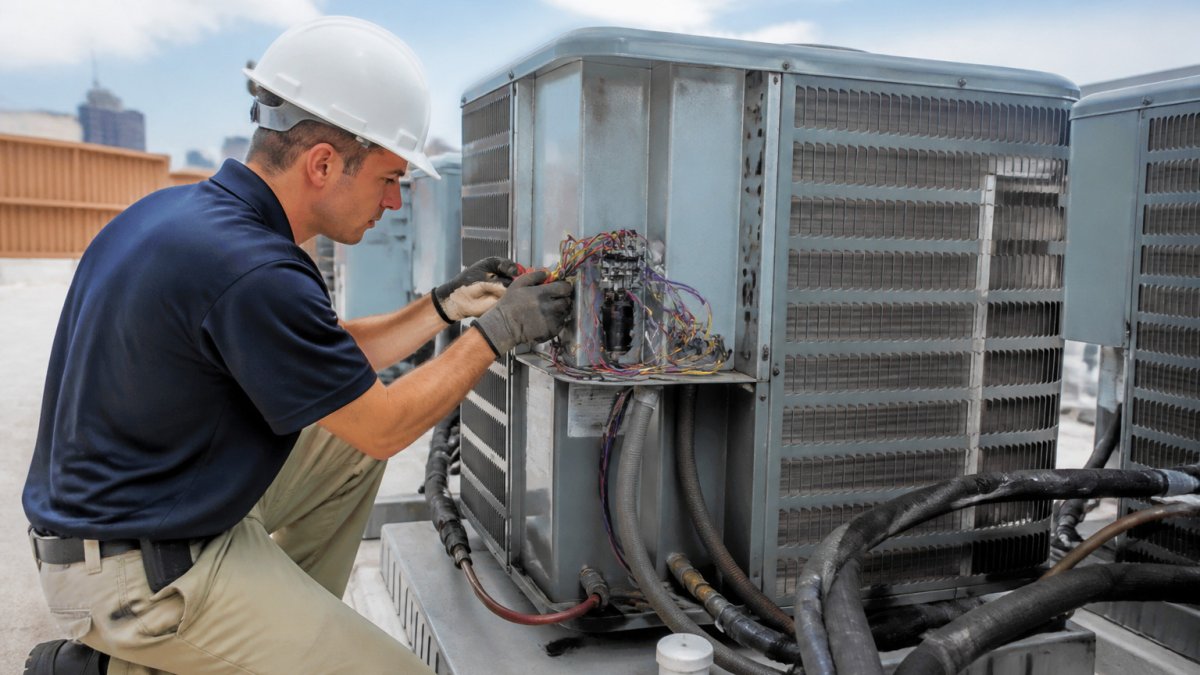
- Test capacitors, contactors, and electrical connections
- Measure blower motor amp draw and airflow
- Inspect condensate drain and pan
- Verify thermostat calibration and cycle timing
Gas furnace
- Inspect heat exchanger for cracks or corrosion
- Clean burners and check flame color and pattern
- Test gas pressure and confirm venting
- Check flue for blockage and proper draft
- Measure temperature rise across the heat exchanger
- Test safety switches and limit controls
Heat pump
- Perform all cooling-side checks above
- Test reversing valve operation and defrost cycle
- Check outdoor fan motor and defrost board
- Verify auxiliary heat staging and balance point
Ductless mini-split
- Clean indoor coil and blower wheel
- Check drain pan and line
- Test refrigerant charge and inverter board
- Verify remote and wall thermostat operation
Readings to Ask For in Writing
Ask the technician to record these values on the invoice or service report for year-over-year comparison:
- Refrigerant pressures and superheat/subcooling
- Temperature rise (heating) or temperature split (cooling) across the coil
- Blower motor amp draw
- Static pressure in the duct system
- Capacitor microfarad readings
Maintenance Log and Measurable Performance
Keep a log with these columns: date, task or service, technician name, readings, filter size and MERV, thermostat settings, and monthly utility use. Review it each season.
Keep a written record of service history.
What a Tune-Up Should Not Include
If a technician recommends repair work, ask for a written quote before it begins. Contact Valley View HVAC for current pricing.
Safety Limits and When to Call a Licensed HVAC Technician
Some maintenance is suitable for homeowners, while other tasks require professional help. Consider contacting a professional if you notice any of these signs:
- Warm or weak air from vents, even after changing the filter
- The system short-cycles, turning on and off every few minutes
- Strange noises such as grinding, squealing, or banging
- Water pooling around the indoor unit or outdoor unit
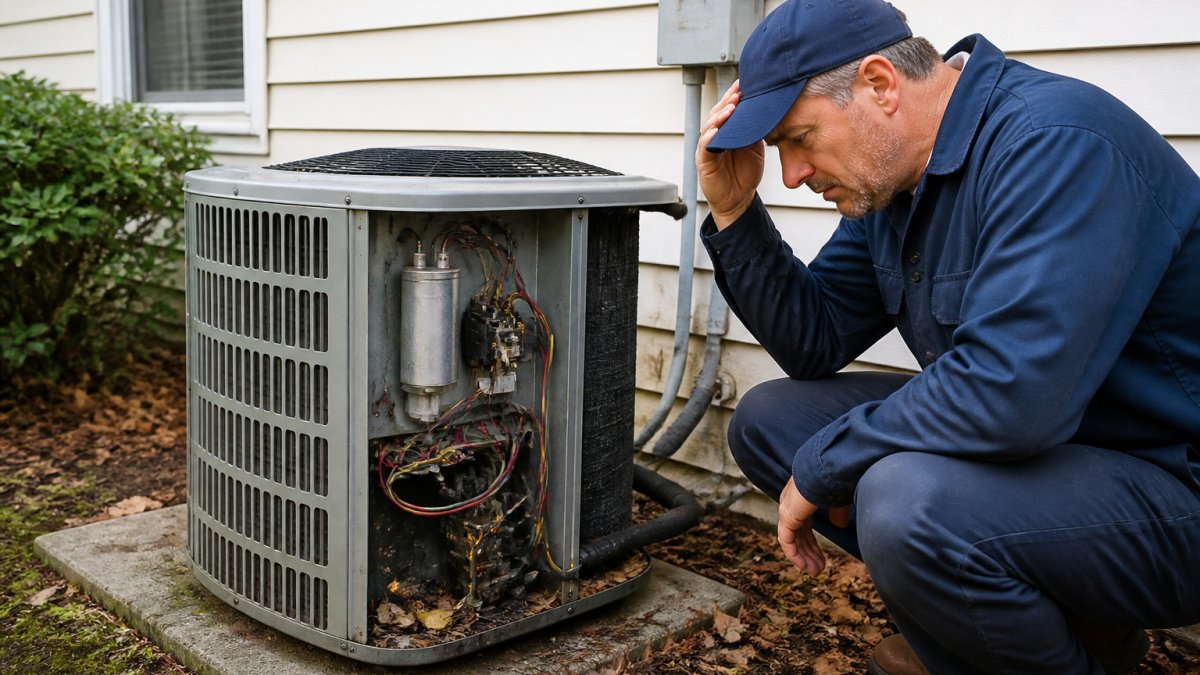
- A burning smell, scorch marks, or breakers that trip repeatedly
- Rooms that stay noticeably hotter or colder than the rest of the house
- Carbon monoxide alarms going off
Do not open gas lines, adjust burner components, or touch live electrical parts. If you smell gas or detect a carbon monoxide alarm, leave the home and contact emergency services from outside.
Uneven room temperatures can stem from airflow problems to duct leaks. Why Is My House Temperature Inconsistent? Fix It Fast helps you decide whether the problem is minor or serious enough to call a technician. For common causes, see Common Causes of Uneven Home Temperature: A Diagnostic Guide. If the system has already failed, Book Emergency HVAC Repair: A Step-by-Step Guide explains how to get urgent service booked quickly.
Our team at Valley View HVAC is fully licensed, bonded, and insured, and we back our workmanship with a 2-year warranty plus manufacturer coverage. Our company is CCB #243211 and EPA-2 certified, and we are a family-run business serving the Willamette Valley.
Booking Your First Valley View HVAC Maintenance Visit
A professional tune-up is one option after your first monthly routine. Contact Valley View HVAC to ask about available maintenance services.
Veterans, educators, seniors, and first responders can ask about our community discounts. We're glad to help you schedule your complimentary consultation.
Frequently Asked Questions
What HVAC maintenance can homeowners do themselves?
Homeowners can check their system manual for guidance on routine maintenance. Avoid working on refrigerant, electrical components, gas burners, or the condensate drain.
How often should you change your HVAC air filter?
Check your system manual for guidance on how often to replace your air filter and which filter is compatible with your system.
How often should an HVAC system be professionally serviced?
Check your system manual for maintenance guidance. Keep a written record of any service visits.
What are signs that an HVAC system needs professional service?
Consider contacting a professional if the system short-cycles, runs continuously without reaching the set temperature, makes grinding, squealing or banging noises, emits a burning smell, shows water pooling near the indoor unit, trips a breaker, or leaves some rooms noticeably hotter or colder than others. Do not open gas or electrical compartments yourself if you notice these symptoms.