 how-to
How to Cut Energy Costs With Commercial HVAC Upgrades
Quick Summary
Commercial HVAC upgrades cut energy costs most effectively when they start with a professional audit that finds where energy is lost. Then prioritize quick wins like scheduling and duct sealing, add controls, and replace equipment sized to the building's real load.
- Start with an audit that includes measured data, not just a visual walkthrough.
- Get a load calculation so new equipment is sized to the real heating and cooling need.
- Compare installed cost, annual energy cost, maintenance, and service life across at least two bids.
- Add occupancy-based scheduling and demand-controlled ventilation to avoid conditioning empty space.
- Confirm controls compatibility and require a commissioning report before buying new equipment.
Table of Contents
- Start With an HVAC Audit to Find Where Energy Is Lost
- Prioritize Commercial HVAC Upgrades by Building Type and Budget
- Compare Payback Periods and Lifecycle Costs Before You Buy
- Upgrade Equipment for Commercial HVAC Energy Efficiency
- Add HVAC Controls and Building Automation
- Set a Maintenance Schedule That Protects Your Savings
- Verify Savings After Installation and Plan Your Next Step
- Frequently Asked Questions
Start With an HVAC Audit to Find Where Energy Is Lost
Last Updated: October 30, 2026
Most commercial buildings waste energy in places nobody looks. A sound commercial HVAC upgrade starts the same way: with an audit.
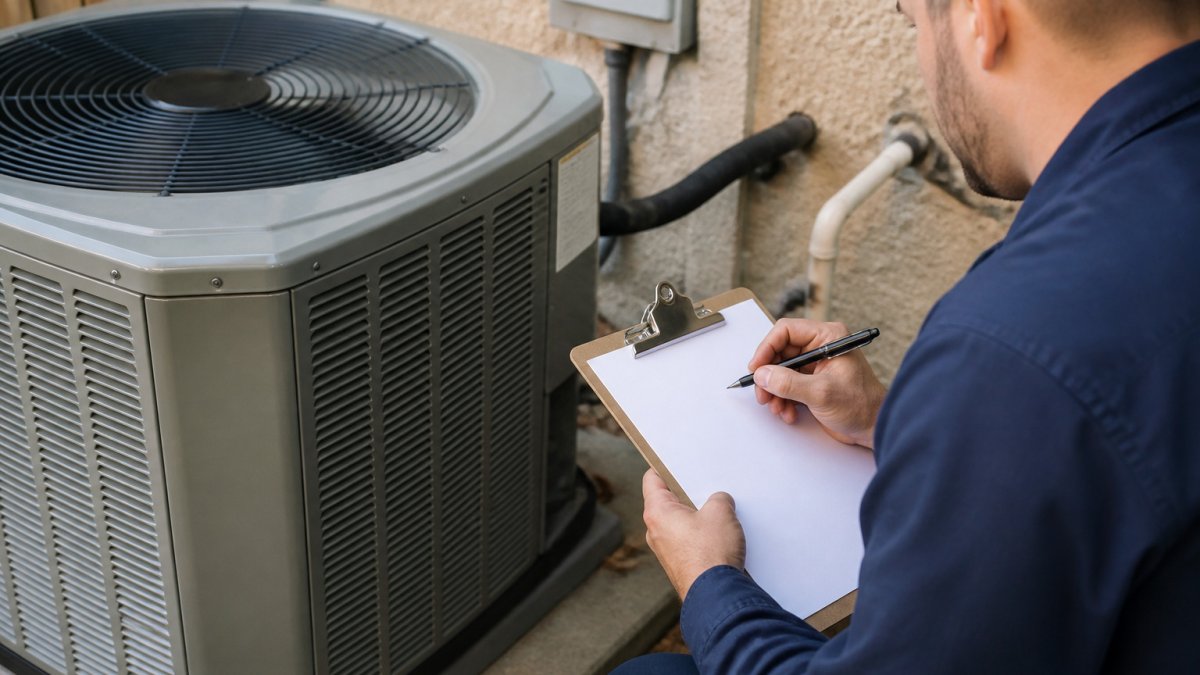
A commercial HVAC audit is a structured inspection of your heating, cooling, ventilation, and controls. It shows where energy is lost and which fixes will pay off first.
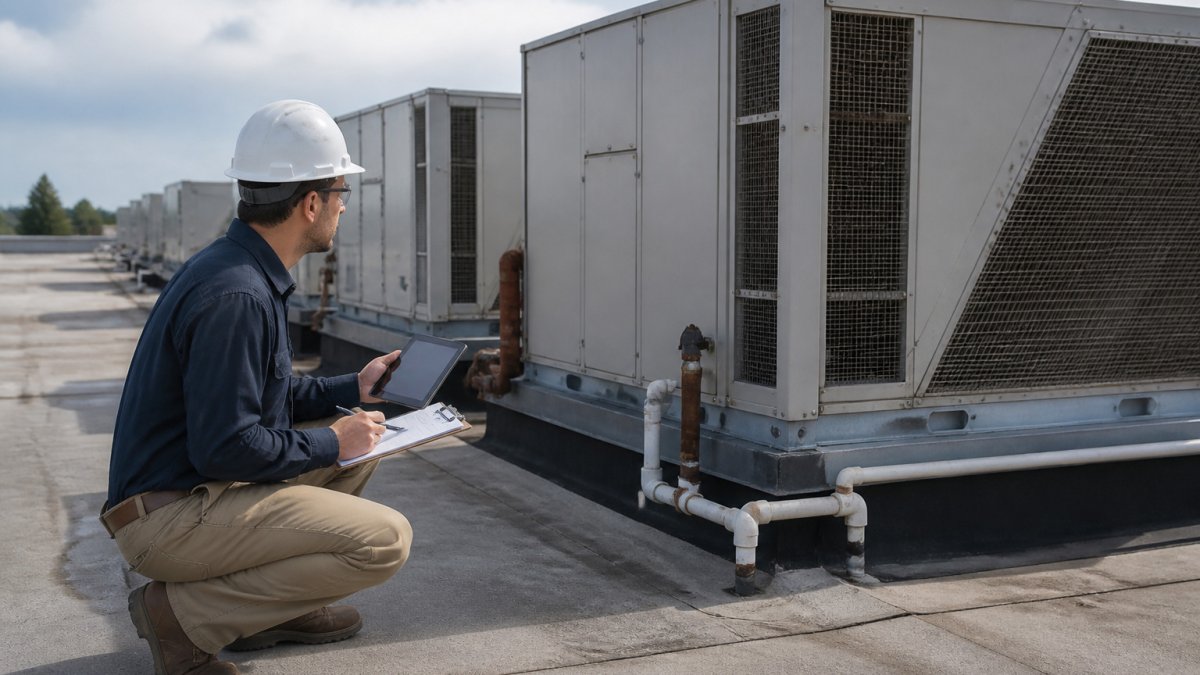
A typical audit covers a few core areas:
- Equipment age, condition, and efficiency ratings
- Ductwork leaks and insulation gaps
- Thermostat and control settings
Ask whether the audit is performed by a qualified professional and whether it includes measured data, not just a visual walkthrough. U.S. Department of Energy guidance on commercial building energy audits
What a Load Calculation Tells You
A load calculation estimates how much heating and cooling your building actually needs. It accounts for square footage, insulation, windows, occupancy, and equipment heat. Here is why it matters: an oversized system short-cycles, wastes energy, and wears out faster.
Watch out: Replacing equipment without a load calculation often means buying the same mistake at a higher price. Match the new system to the real load, not the size of the old unit.
Prioritize Commercial HVAC Upgrades by Building Type and Budget
Not every building needs the same upgrades first. A restaurant with a 14-hour kitchen day has different needs than a small office that closes at 5 p.m.
We recommend sorting options into three tiers:
- Quick wins: Thermostat scheduling, sealing duct leaks, and replacing dirty filters
- Mid-range projects: Controls upgrades, variable-speed fans, and better insulation
- Major investments: Full equipment replacement with high-efficiency units or heat pumps
Quick wins cost little and often recover their cost within months. Start there, then move to larger projects as budget allows.
Building type shapes the list. Retail spaces with heavy foot traffic need strong ventilation controls. Offices benefit most from occupancy-based scheduling.
Compare Payback Periods and Lifecycle Costs Before You Buy
A payback period is the time it takes for energy savings to cover the installed cost of an upgrade. A lifecycle cost looks further out, adding purchase, installation, energy, maintenance, and replacement over the equipment's service life. Compare both before you sign anything, because the cheapest first cost is often the most expensive system over 15 years.
Here is a simple way to run the numbers:
- Get the total installed cost from at least two bids, and make sure the bids include crane time, curb adapters, electrical work, controls integration, and commissioning, not just the box price.
- Estimate annual energy savings from the audit data and your utility bills, not from a manufacturer's marketing sheet.
- Divide the installed cost by annual savings to get the simple payback.
- Add 10 to 15 years of maintenance, refrigerant, filter, and energy costs for the lifecycle view.
- Subtract rebates and tax incentives to get the net cost before you compare payback.
Treat payback timing as something to confirm with your own audit data rather than a fixed promise.
Compare the Whole Life, Not Just the Sticker
Two systems with the same efficiency rating can have very different lifecycle costs. A premium-efficiency rooftop unit may cost more upfront but use less energy, need fewer repairs, and last longer. A lower-cost unit may save money on day one and cost more every summer after that.
Build a simple comparison for each option you are considering:
- Installed cost: equipment, labor, electrical, controls, permits, and commissioning
- Annual energy cost: estimated from part-load efficiency and your actual run hours
- Annual maintenance: filters, belts, coil cleaning, refrigerant checks, and service contracts
Use Incentives to Change the Math
Federal, state, and utility programs can lower the net cost of high-efficiency equipment, and eligibility rules vary by program. ENERGY STAR commercial HVAC program information
Incentive rules change, so confirm eligibility, required documentation, and deadlines before you buy. A qualified tax advisor or your utility's commercial program office can confirm what applies to your building. Build the incentive into the payback math only after you have written confirmation it applies.
A Worked Example
Consider a hypothetical example to illustrate the arithmetic: divide the installed cost by the annual energy savings to get the simple payback, add annual maintenance to see the lifecycle view, and subtract any rebate you have confirmed in writing.
Pricing depends on system size, site conditions, and installation scope. Visit the Valley View HVAC website for current pricing or to request a quote tailored to your building.
The table below sums up the lifecycle cost inputs to gather for each option before you compare bids.
| Item | What to gather | Note |
|---|---|---|
| Installed cost | Equipment, labor, electrical, controls, permits, commissioning | Ask bids to include all of these |
| Annual energy cost | Estimated from part-load efficiency and actual run hours | Use audit data, not marketing sheets |
| Annual maintenance | Filters, belts, coil cleaning, refrigerant checks, service contracts | Include every recurring task |
| Expected service life | Typically 15 to 20 years for commercial rooftop units | Longer for some boilers and chillers |
| Replacement cost | Cost at end of life, discounted back to today | Keeps the comparison fair |
| Rebates and incentives | Net cost after confirmed incentives | Count only with written confirmation |
Upgrade Equipment for Commercial HVAC Energy Efficiency
When it is time to replace equipment, focus on efficiency ratings and right-sizing.
Schedule your complimentary consultation →
Commercial options include rooftop units, split systems, variable refrigerant flow systems, and heat pumps. Each suits different building layouts.
Find details on our commercial AC installation and commercial heating installations pages.
Oversizing is a common and costly error, which is why a load calculation is worth requesting before any replacement.
Add HVAC Controls and Building Automation
Controls are often the cheapest way to cut energy use, and they are the upgrade most likely to be left half-finished. A smart thermostat is a start, but a commercial building needs scheduling, zoning, occupancy sensing, and a way for new equipment to talk to the system already running the building. That is where most of the savings hide.
Useful control strategies include:
- Occupancy-based scheduling for offices, meeting rooms, and restrooms, so unoccupied space is not conditioned
- Demand-controlled ventilation tied to CO2 sensors, so outdoor air is brought in only when people are actually there
- Optimal start routines that warm or cool the building just in time for occupancy instead of running all night
- Supply air temperature and static pressure reset so fans and compressors do not work harder than the load requires
Go Beyond Smart Thermostats
A smart thermostat is a good fit for a small office or a single-zone retail space. Larger buildings usually need a building automation system, or BAS, that coordinates rooftop units, air handlers, variable-frequency drives, and zone dampers from one place.
If you already have a BAS, the question is not whether to add controls but whether the new equipment can integrate with what you have.
Confirm Compatibility Before You Buy
Controls integration is where projects go wrong. Before you buy, confirm:
- Protocol: does the new equipment support the open protocol your BAS uses, such as BACnet or Modbus?
- Points list: which data points will the new unit expose, and which will the BAS need to control it?
- Licensing and front-end costs: will the BAS vendor charge to add points, graphics, or a new license?
- Warranty language: does the equipment warranty stay valid when a third-party controls contractor touches the sequence of operations?
Zone the Building to Match How It Is Used
Zoning is often the highest-return controls change in a mixed-use building. A restaurant with a hot kitchen, a cool dining room, and a busy patio has three different loads. An office with a sunny west side and a shaded east side has two.
Variable refrigerant flow systems and zoned ducted systems are built for this, but even a conventional system can gain from zone dampers and a zoning controller.
Measure What the Controls Are Doing
Controls only save energy if you check them. Pull runtime reports monthly, compare scheduled hours with actual runtime, and review alerts for equipment running outside schedule. A common pattern is that a single overridden schedule or a stuck damper quietly erases a large share of the expected savings. A short monthly review catches those problems before they show up on the utility bill.
Set a Maintenance Schedule That Protects Your Savings
Efficiency fades without care. Dirty coils, slipping belts, and clogged filters can quietly raise energy use. A consistent maintenance schedule keeps equipment performing as designed.
Build a schedule around these tasks:
- Replace or clean filters on a set interval, often monthly to quarterly
- Clean coils and check refrigerant levels twice a year
- Inspect belts, motors, and bearings
- Test thermostats and controls for accurate operation
Commercial systems often have specific service and compliance requirements. Check current guidance before setting your schedule. ASHRAE standards for building ventilation and maintenance
Valley View HVAC offers reliable maintenance and emergency repair for commercial properties.
Verify Savings After Installation and Plan Your Next Step
Savings are not real until you measure them. Compare utility bills and runtime data before and after the upgrade. Track at least 12 months where possible, since weather and occupancy shift with the seasons.
If results fall short, revisit the controls and settings first. Many performance gaps come from setup, not hardware. A follow-up check often finds easy fixes.
Ready to start? Request a complimentary consultation with Valley View HVAC.
Frequently Asked Questions
What HVAC upgrades save the most energy in a commercial building?
The biggest savings usually come from fixing the systems that run longest and waste the most energy. Replacing aging rooftop units with high-efficiency equipment, adding variable-speed drives to fans and pumps, and tightening controls on outside air and scheduling typically deliver the largest reductions. Start with the audit to confirm which equipment is oversized, short-cycling, or running during unoccupied hours, then sequence upgrades by the savings each one produces relative to its cost.
How long does it take to recover the cost of a commercial HVAC upgrade?
Payback depends on the equipment, the building's operating hours, your utility rates, and available incentives. To estimate it, divide the net installed cost, after rebates and tax credits, by the annual energy and maintenance savings. Compare that figure with the equipment's expected service life, since a system that pays back in five years but lasts fifteen can still be a strong investment. Get a written quote and an energy model before deciding, because actual pricing varies with capacity, site conditions, and labor. Contact Valley View HVAC on our website for a current quote for your building.
Do smart thermostats help reduce commercial HVAC costs?
They can, when they are part of a controlled system rather than a standalone upgrade. Scheduling setbacks for unoccupied hours, using occupancy sensors, and limiting temperature drift keep equipment from running when no one needs it. Savings depend on how well the controls match how the building is actually used, so set schedules from real occupancy data and recheck them after any change in tenants or hours.
How do I know if my commercial HVAC system needs replacing or just tuning?
If the system is still reasonably efficient and mainly suffers from poor controls, dirty coils, or unbalanced airflow, retro-commissioning and maintenance may recover most of the lost efficiency for far less money. Replacement makes more sense when equipment is near the end of its service life, repairs are frequent, or the unit is so oversized or outdated that no adjustment will fix its performance. An audit with measured energy data gives you the evidence to choose between the two.