 how-to
How Do You Handle an HVAC System Breakdown?
Last Updated: November 4, 2026
Quick Summary
When an hvac breakdown hits, triage the symptom first: shut off the system at the thermostat and breaker for any fire, gas, refrigerant, or electrical hazard, then call a licensed technician. For safe issues, check power, thermostat settings, and the filter before assuming the worst.
- Never reset a tripped breaker more than once; a repeat trip signals a real electrical fault.
- Replace the air filter every 1-3 months to prevent poor airflow and system strain.
- Keep at least two feet of clearance around the outdoor unit so the condenser can breathe.
- A dead furnace below freezing is urgent because pipes can freeze and burst.
- Never run a gas stove or oven to heat a room; it is a carbon monoxide hazard.
Table of Contents
- Step 1: Triage the Breakdown Before You Touch Anything
- Step 2: Run Through Your HVAC Troubleshooting Cheat Sheet
- Step 3: Match Common HVAC Problems and Solutions
- Step 4: Know When to Call for Emergency HVAC Repair
- Step 5: Protect Your Comfort While You Wait
- Step 6: Use an HVAC Maintenance Checklist to Prevent the Next Breakdown
- Book Your Breakdown Diagnosis with Valley View HVAC
- Frequently Asked Questions
Step 1: Triage the Breakdown Before You Touch Anything
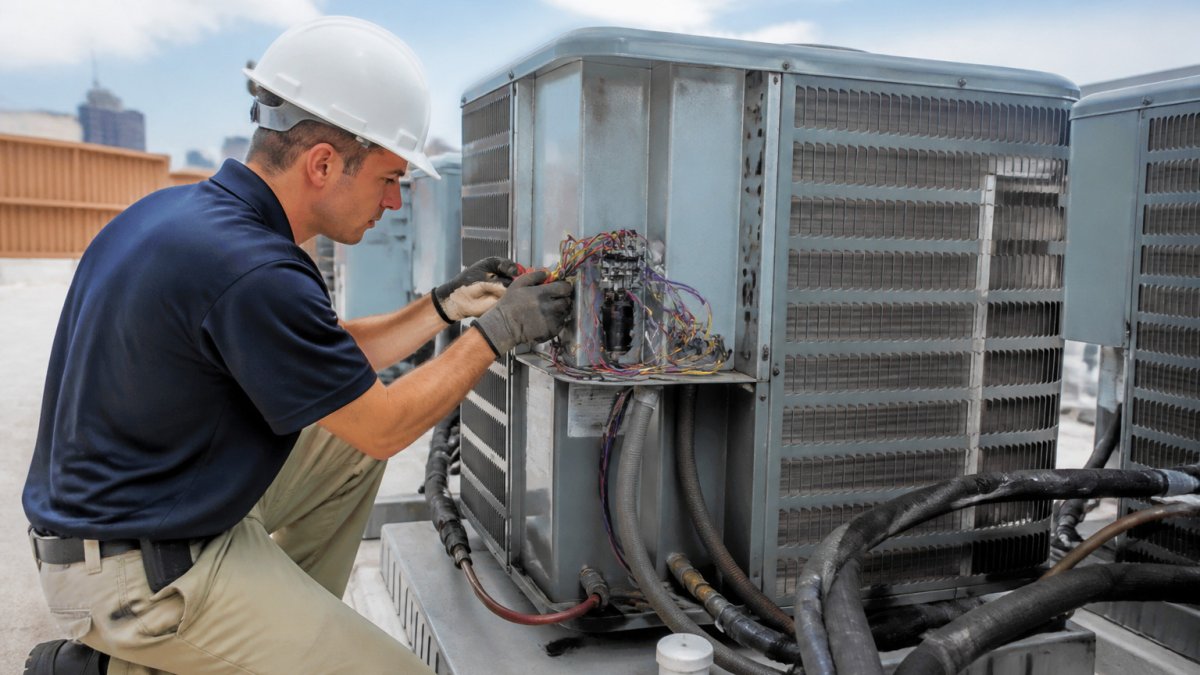
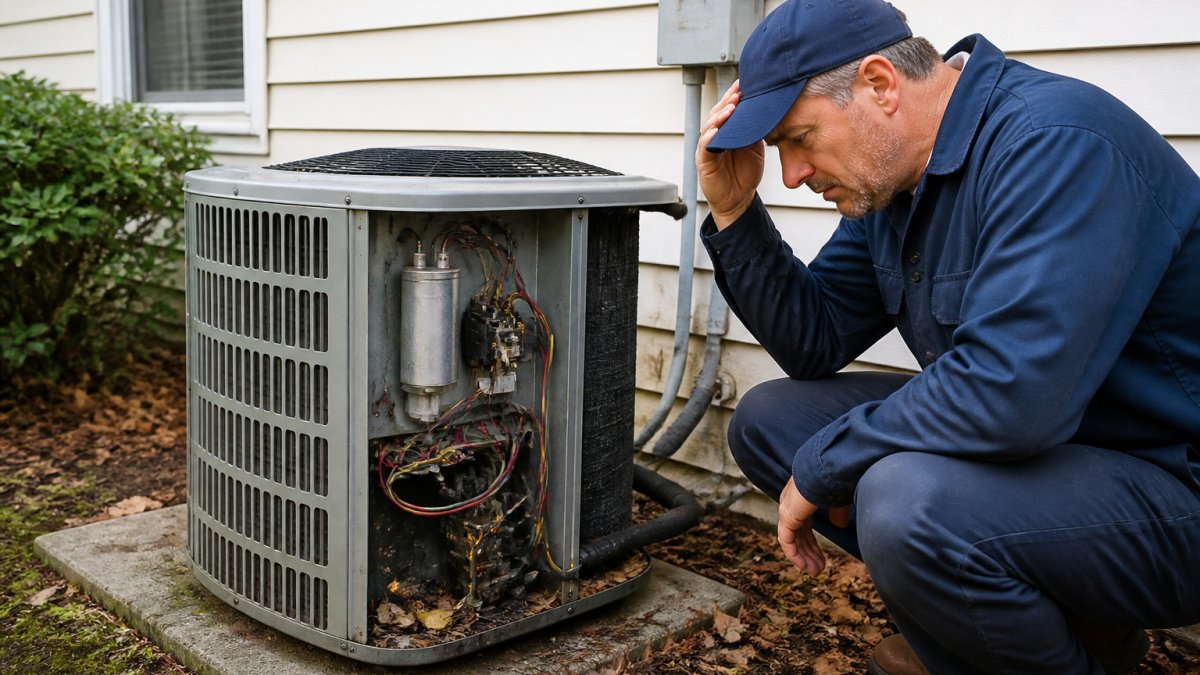
When an HVAC system breakdown hits, the first move is not grabbing a screwdriver. It is deciding whether the situation is safe to touch at all. Safety comes first, diagnosis second. A hvac breakdown can be anything from a dead thermostat battery to a burning smell from the blower, and those two problems demand completely different responses. For a quick list of signs you need to call furnace repair services, check the warning signs your furnace gives before it fails.
Hazard Triage: Match the Symptom to the Response
| What you notice | Hazard level | Immediate action |
|---|---|---|
| Burning or melting-plastic smell; smoke or sparks | Stop, fire risk | Shut off at thermostat and breaker if safe, leave the area, call 911 if smoke or flames are visible, then call a licensed technician |
| Gas smell near a furnace or water heater | Stop, gas leak | Do not flip switches or use a phone inside; leave the building, call your gas utility's emergency line from outside, then call a technician |
| Ice or frost on refrigerant lines; hissing or oily residue | Stop, refrigerant concern | Turn the system off at the thermostat, do not touch the lines, ventilate the area, and call a licensed technician |
| Water pooling around the furnace, air handler, or outdoor unit | Caution, water and electrical risk | Shut off the system at the thermostat, do not stand in standing water near the unit, and call a technician |
| Breaker trips again immediately after one reset | Stop, electrical fault | Do not reset a second time; leave the breaker off and call a licensed electrician or HVAC technician |
| Loud banging, grinding, or screeching | Caution, mechanical fault | Shut off at the thermostat and call a technician before restarting |
| Weak airflow, wrong temperature, short cycling, no response from thermostat | Safe to check | Proceed to the homeowner troubleshooting steps below |
Any row marked Stop is a safety concern, not a simple fix. Shut the system off at the thermostat and, if you can reach it safely, at the breaker. Never open a gas furnace panel to "take a look" if you smell gas. Leave the building and call your utility or a licensed technician.
Watch out: resetting a tripped breaker more than once is the mistake we see most. A breaker that trips again right after one reset is telling you there is a real electrical fault, and repeated resets can damage the equipment or start a fire.
Safe Homeowner Checks vs. Stop-and-Call
The safe checks are limited to power, thermostat settings, filter condition, vent and register blockage, and outdoor unit clearance. Everything else, refrigerant lines, gas valves, electrical panels beyond the main breaker, blower assemblies, and control boards, belongs to a licensed technician. If you are unsure which category a symptom falls into, treat it as a stop-and-call situation. The cost of a service call is always lower than the cost of a fire, a gas leak, or a refrigerant exposure.
Step 2: Run Through Your HVAC Troubleshooting Cheat Sheet
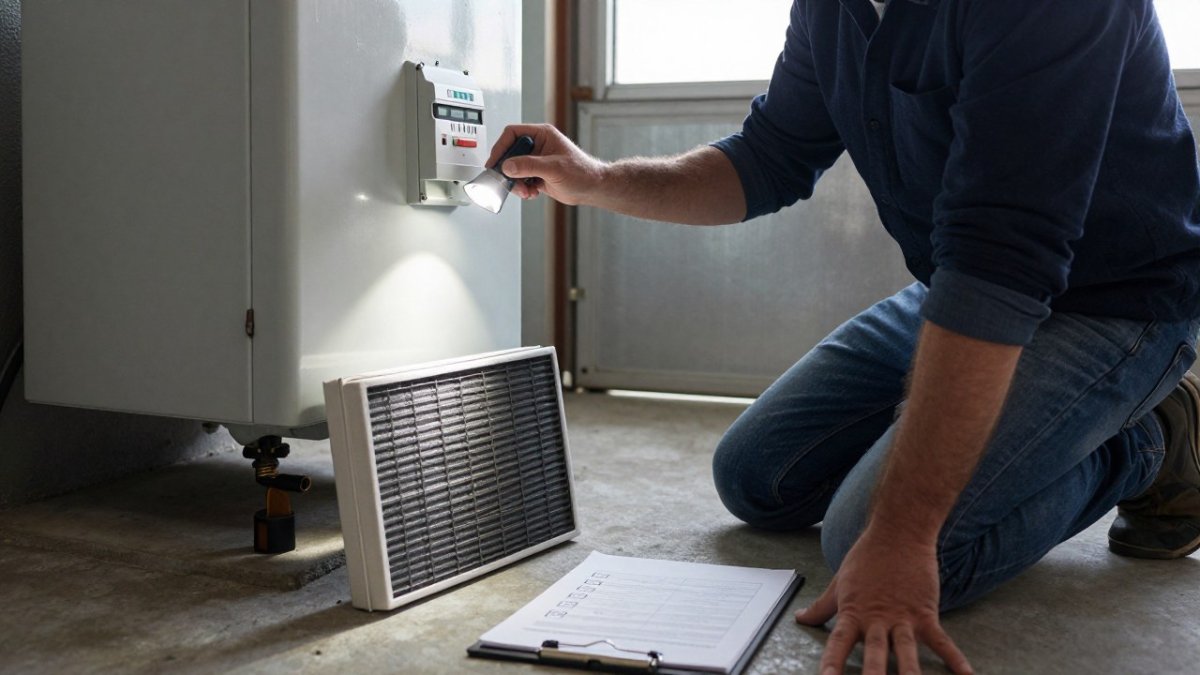
A good HVAC troubleshooting cheat sheet starts with the cheapest, simplest checks. Most no-heat and no-cool calls we run trace back to power, settings, or a clogged filter, not a failed compressor. Work through these basics in order before you assume the worst.
Power, Breakers, and Switches
Start at the power supply. Confirm the thermostat is on and set to the right mode. Then find the circuit breaker for your system and look for a tripped breaker sitting between ON and OFF. Flip it fully to OFF, then back to ON once. If it trips again, stop. That points to a real electrical fault, and repeated resets can damage the equipment or start a fire. Check the furnace power switch too. It looks like a light switch and gets bumped by accident more often than you'd think.
Thermostat Settings and Batteries
Thermostat settings cause a surprising share of "breakdowns." Check that it is set to Heat or Cool, not Fan or Off, and that the temperature is past the current room reading. If it has batteries, swap them. A dim or blank screen usually means a dead battery, not a dead system. Smart thermostats can also lose their schedule after a power blip, so confirm the setpoints.
Step 3: Match Common HVAC Problems and Solutions
Most HVAC problems and solutions fall into a handful of patterns. Match the symptom to the fix before you spend money on a service call. For a deeper look at common causes of uneven home temperature, see the diagnostic guide. The table below is a starting point, not a diagnosis, use it to decide whether a safe homeowner check applies or whether the symptom points straight to a technician.
Symptom-to-Cause Troubleshooting Path
| Symptom | Likely cause | Safe homeowner check | Next step |
|---|---|---|---|
| No power, blank thermostat | Dead thermostat battery, tripped breaker, or bumped furnace switch | Replace thermostat batteries; reset breaker once; confirm the furnace power switch is on | If power returns, monitor; if breaker trips again, stop and call a technician |
| Weak airflow from vents | Clogged air filter, closed register, or blocked return | Replace the filter; open registers; clear furniture and rugs from returns | If airflow stays weak after a filter change, call a technician to inspect the blower and ductwork |
| System runs but no cool air | Thermostat mode, outdoor unit obstruction, or low refrigerant | Confirm Cool mode and setpoint; clear two feet of clearance around the outdoor unit | If the outdoor unit is clear and the system still blows warm, call a technician, refrigerant work requires a license |
| Short cycling (frequent on-off) | Restricted airflow, dirty flame sensor, or oversized system | Change the filter and confirm vents are open | If short cycling continues, call a technician; repeated short cycling strains the compressor |
| Warm air from some vents | Ductwork leak, disconnected duct, or damper issue | Confirm dampers are open and registers are unobstructed | Call a technician for duct inspection and sealing |
| Tripping breaker | Electrical fault, failing motor, or short | Reset once only | Stop resetting and call a technician or electrician |
| Grinding or screeching from the blower | Worn bearings, failing blower motor, or debris | Shut the system off at the thermostat | Call a technician before restarting; running it can damage the motor |
| Ice on refrigerant lines | Low refrigerant, restricted airflow, or dirty coil | Change the filter and clear the outdoor unit | Turn the system off and call a technician; do not chip ice off the lines |
Filters, Vents, and Outdoor Unit Obstructions
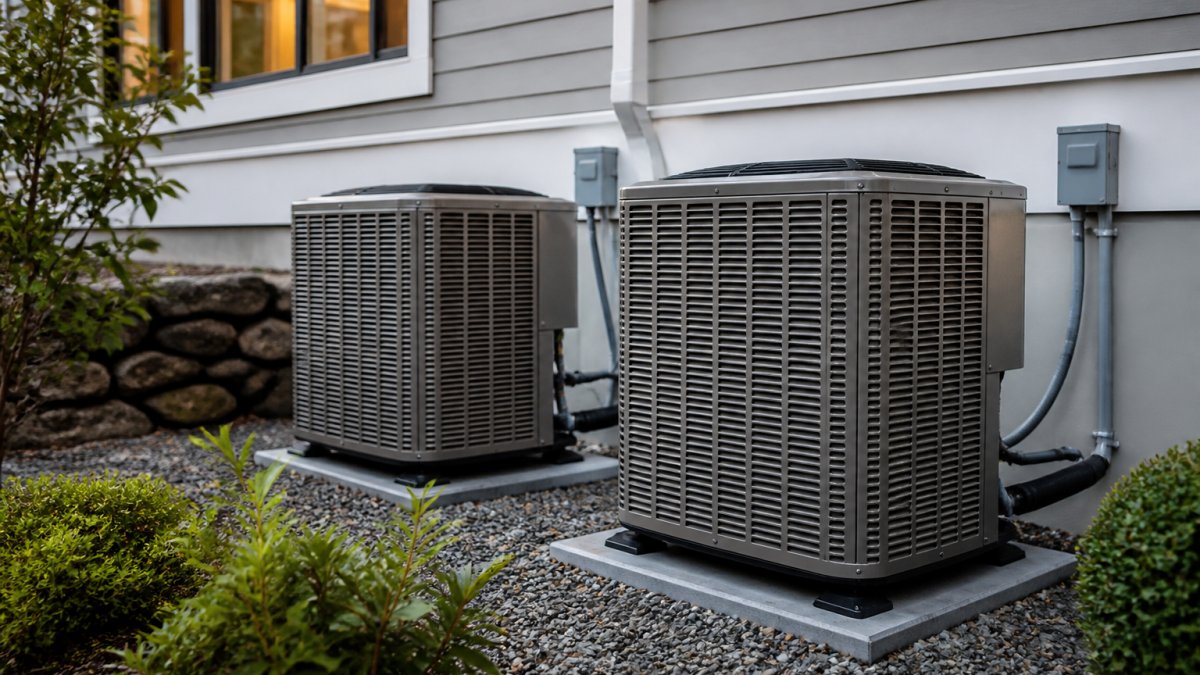
A clogged filter is the most common cause of poor airflow and system strain. Pull it out and hold it to the light. If you can't see through it, replace it. Next, check that supply and return vents are open and not blocked by furniture or rugs. Then step outside and clear leaves, grass, and debris from around the outdoor unit. Keep at least two feet of clearance so the condenser can breathe. Restricted airflow makes the system work harder, raises energy consumption, and shortens equipment lifespan.
What to Note Before You Call
A technician diagnoses faster when you can describe the pattern. Before you call, write down the thermostat setting and room temperature, whether the outdoor unit is running, how often the system cycles, any sounds or smells and when they started, the last date you changed the filter, and whether the breaker has tripped. This information shortens the diagnostic visit and helps the technician bring the right parts on the first trip.
Schedule your complimentary consultation →
Step 4: Know When to Call for Emergency HVAC Repair
Call for emergency HVAC repair when the problem involves safety, extreme weather, or a system that won't run at all. If it's below freezing outside, a dead furnace is urgent, not a wait-until-Monday issue.
Watch out: resetting a tripped breaker more than once is the mistake we see most.
Also call a technician when you hear grinding from the blower, see ice on the refrigerant lines, or notice the system short cycling. These point to moving parts or refrigerant problems that need a licensed pro.
Step 5: Protect Your Comfort While You Wait
While you wait for a technician, protect your home and your comfort. In cold weather, keep faucets on exterior walls dripping to prevent frozen pipes. Close off unused rooms and use space heaters safely, keeping them away from curtains and never leaving them unattended. In hot weather, close blinds during the day, run ceiling fans, and open windows at night if it's safe. Never run a gas stove or oven to heat a room (the CDC). That is a carbon monoxide hazard.
Step 6: Use an HVAC Maintenance Checklist to Prevent the Next Breakdown
Routine maintenance is the best defense against a repeat hvac breakdown. A simple HVAC maintenance checklist catches small problems before they strand you in extreme weather. Here's the schedule we recommend:
- Replace the air filter every 1-3 months
- Clear debris from the outdoor unit each season
- Check thermostat batteries twice a year
- Inspect vents and ductwork for blockages
- Schedule a professional tune-up before heating and cooling season
- Test the system's starting cycle in early spring and fall
Skipping tune-ups is the quiet cause of most mid-winter failures.
Book Your Breakdown Diagnosis with Valley View HVAC
A breakdown in the middle of a cold snap is stressful, and guessing at the fix usually makes it worse. Valley View HVAC handles diagnostics and repair for homes and businesses in the Willamette Valley. See our AC repair service for Salem homes for flat-rate diagnostics. Our team is fully licensed, bonded, and insured, backed by a 2-year workmanship warranty, and we offer community discounts for veterans, educators, and first responders. When the system quits, we help you get it running again without the runaround.
Contact Valley View HVAC to schedule your complimentary consultation.
Frequently Asked Questions
What should I do first when my HVAC system breaks down?
Start with safety: if you smell gas, see smoke, hear grinding, or notice water pooling near electrical parts, shut the system off at the thermostat and breaker. If nothing looks hazardous, check the thermostat settings and batteries, confirm the breaker has not tripped, and inspect the air filter. These three checks resolve a large share of hvac breakdown calls before a technician is needed.
How can I tell whether an HVAC breakdown is an emergency?
An hvac breakdown counts as an emergency when there is a safety hazard (gas odor, burning smell, sparking, carbon monoxide alarm), when indoor temperatures pose a health risk to infants, seniors, or anyone with medical conditions, or when water is leaking into the structure. In those cases, shut the system down and call for emergency HVAC repair immediately rather than troubleshooting further.
Is it safe to keep running an HVAC system that is making unusual noises?
No. Banging, grinding, or screeching usually points to a failing blower, loose moving parts, or a motor under strain. Running it can turn a small repair into a full equipment failure. Shut the system off, note when the noise occurs (startup, shutdown, or continuous), and describe it to your technician so the diagnosis is faster.
How can I help prevent another HVAC system breakdown?
Follow a simple HVAC maintenance checklist: replace or clean the air filter every 1 to 3 months, keep the outdoor unit clear of leaves and debris, schedule professional inspections before heating and cooling season, and watch for rising energy bills or uneven airflow. Routine maintenance catches worn parts before they fail and supports system efficiency and equipment lifespan.