 listicle
Best Air Filtration for Oregon Homes: 2026 Guide
Table of Contents
- Why Oregon Homes Need Specialized Air Filtration
- Top Air Purifiers for Oregon Homes: Comparison Table
- HVAC Air Filter MERV Rating: What Works for Your System
- Air Filtration for Wildfire Smoke: Strategies That Work
- Portable vs. Whole-House Air Purifier: Which Fits Your Home?
- Whole-House Purifier Installation: What to Expect
- Ongoing Costs and Maintenance for Oregon Air Filtration
- Frequently Asked Questions
Last Updated: October 17, 2026
Why Oregon Homes Need Specialized Air Filtration
The best air filtration for Oregon homes looks different from what works in Phoenix or Atlanta, and choosing the best air filtration for oregon homes starts with the climate.
The Valley View HVAC team has spent years installing and servicing systems designed for this climate, and the pattern is consistent: homes that handle both the damp-season allergens and the smoke-season particles perform far better than homes set up for only one.
Wildfire Smoke and Seasonal Air Quality Challenges
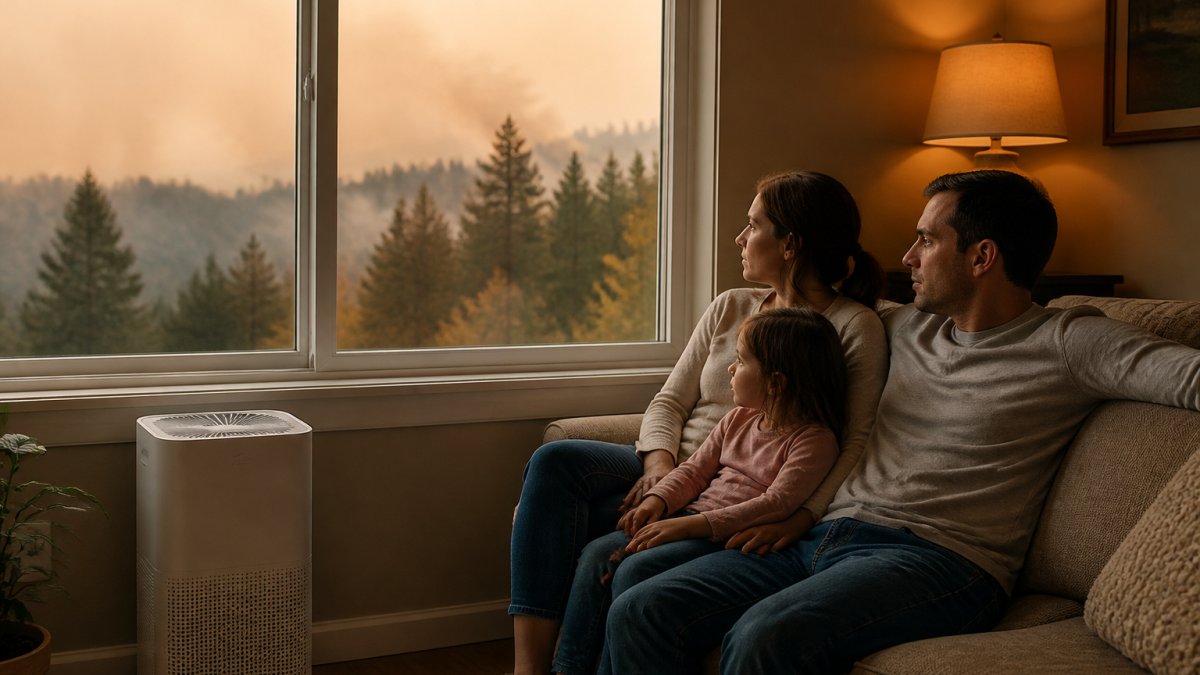
Wildfire smoke is the single biggest reason Oregon homeowners start researching filtration. When smoke settles over the valley, fine particulate matter, the tiny particles that reach deep into the lungs, spikes indoors as well as out.
The rest of the year brings its own load: pollen in spring, mold spores from our damp winters, and pet dander trapped by tightly sealed homes.
Top Air Purifiers for Oregon Homes: Comparison Table
For most homes, the best starting point is a portable HEPA purifier sized to the room, paired with an upgraded HVAC filter for whole-home coverage. The table below compares leading models on the factors that matter most during smoke season and everyday allergy months: clean air delivery rate (CADR), recommended room size, filter replacement cadence, and noise. Prices are manufacturer suggested retail and move around with sales, so treat them as a starting point rather than a quote.
| Model | Best For | CADR (smoke / dust / pollen) | Suggested Room Size | Filter Life | Price |
|---|---|---|---|---|---|
| Coway Airmega Mighty2 | Bedrooms and offices | Roughly 240-250 CFM class | Up to about 700 sq ft at 1 air change per hour | About 12 months | $269.99 |
| Coway Airmega 400S | Open living areas | Roughly 350 CFM class | Up to about 1,560 sq ft at 1 air change per hour | About 12 months | $749 |
| Coway Airmega ProX | Large rooms and smoke events | Higher-output class; five air changes per hour up to 693 sq ft | Up to about 2,400 sq ft at 1 air change per hour | About 12 months | Not listed |
| Winix 5530 | Most people | Mid-size class | Up to about 500 sq ft | About 12 months | Not listed |
| Coway Airmega 450 | Overall pick | Mid-to-large class | Up to about 1,000 sq ft | About 12 months | Not listed |
How to read CADR for smoke season
CADR is measured separately for smoke, dust, and pollen, and the smoke number is the one that matters when wildfire haze settles in. A useful rule of thumb from AHAM, the trade group that runs the CADR program, is that a purifier's smoke CADR should be at least two-thirds of the room's square footage for a single air change per hour, and higher if you want faster cleanup. A 300-square-foot bedroom, for example, wants a smoke CADR of at least 200 CFM; a 600-square-foot living area wants at least 400 CFM.
Matching units to rooms, not to the whole house
A common mistake is buying one oversized purifier and expecting it to clean a whole floor. HEPA purifiers clean the room they sit in, and airflow through doorways is weak. A more effective pattern for smoke season is one mid-size unit in the bedroom and one in the main living space, each sized to its room, rather than a single large unit in a hallway.
What the table does not tell you
Two things get left out of most roundups. First, filter replacement cost: a $270 purifier with a $60 annual filter is a different long-term purchase than a $750 unit with a $120 filter, and the gap compounds over five years. Second, noise at the highest fan speed. Smoke events push people to run purifiers on high for days, and a unit that is quiet on low can be distracting on turbo.
HVAC Air Filter MERV Rating: What Works for Your System
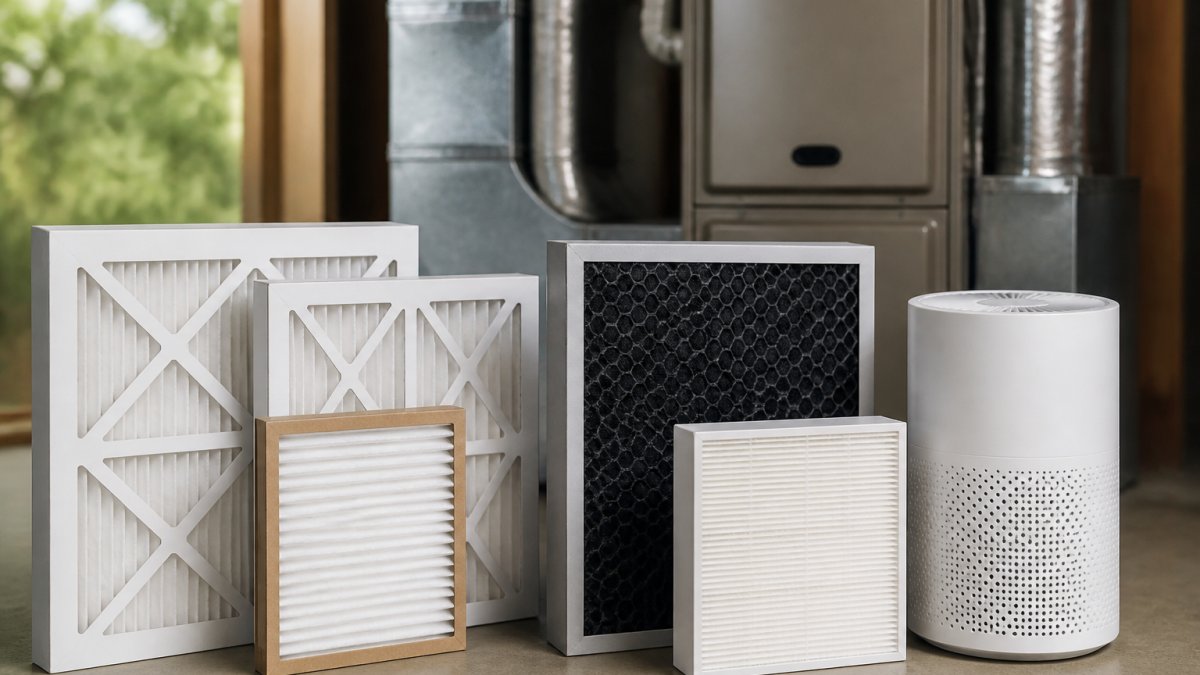
The right HVAC air filter MERV rating for most Oregon homes is MERV 8 to MERV 13. MERV measures how well a filter captures particles, and higher is not automatically better.
A MERV 8 filter handles pollen, dust, and mold spores and keeps airflow strong. MERV 11 to 13 adds meaningful smoke and fine-particle capture, which is why many homeowners switch up during wildfire season. The trade-off: a very high MERV rating can strain a system not designed for the added resistance, reducing airflow and efficiency. Check your system's specifications before jumping to MERV 16.
Air Filtration for Wildfire Smoke: Strategies That Work
Effective air filtration for wildfire smoke combines three moves: seal the house, filter the air, and create a clean room.
Next, run a HEPA purifier in the room where you sleep, sized to that room's square footage. A single clean room gives everyone a place to breathe easily during a bad smoke stretch.
The EPA's guidance on wildfire smoke and indoor air recommends creating a designated clean room and avoiding activities that add indoor particles, like frying or burning candles, during smoke events. Sealing gaps around doors and windows helps too.
Portable vs. Whole-House Air Purifier: Which Fits Your Home?
Choosing between a portable vs. whole-house air purifier comes down to coverage, upfront cost, and how much of the house you need clean at once. Most homes end up with a hybrid: a whole-house filter or purifier handling the background load, plus one or two portable HEPA units for bedrooms and the main living space during smoke events.
Schedule your complimentary consultation →
Coverage and upfront cost
A portable HEPA unit cleans one room well. Expect to spend roughly $150 to $800 per unit depending on CADR and features, and to need one unit per room you want cleaned. A whole-house system ties into your HVAC and filters air across every room, but the upfront cost is higher because it includes equipment and installation. A common range for a professionally installed whole-house air purifier is roughly $1,500 to $4,000, depending on the technology, the size of the system, and whether ductwork modifications are needed.
Operating costs over time
Portable units are cheap to run. Most draw between 30 and 60 watts on a medium setting, which is a few dollars a month at typical residential electric rates, and HEPA filters usually need replacement once a year at roughly $40 to $120 each. Whole-house systems use larger filters changed a few times a year, and some technologies add a small electrical draw. The bigger whole-house cost is often the filter itself: a 4- to 5-inch media filter can run $30 to $80 per change, and a yearly professional check adds to the total.
When each approach makes sense
A portable unit is the practical answer for a small apartment, a single bedroom, or a renter who cannot modify the HVAC system. A whole-house system suits a larger home, a household with sensitive occupants who need clean air in every room, or a homeowner who wants one filter schedule instead of juggling several units. For a house with multiple bedrooms and a recurring smoke-season problem, the whole-house route usually pays off in comfort and simplicity, especially if the HVAC system can handle a higher-MERV filter without airflow problems.
The hybrid approach most homes actually use
The pattern that works best in practice is a whole-house filter or purifier for background filtration, plus a portable HEPA unit in the bedroom and one in the main living area for smoke events. This gives you clean air everywhere at a baseline and a clean room to retreat to when outdoor air quality drops. It also lets you run the portable units only when needed, which extends filter life and keeps electricity use down.
EPA's guidance on wildfire smoke and indoor air
Whole-House Purifier Installation: What to Expect
Whole-house air purifier installation typically takes a few hours and ties a filtration unit into your existing ductwork and HVAC system. The installer assesses your system's capacity, mounts the purifier, and connects it so treated air flows through the whole house.
Expect an evaluation of your ductwork and airflow first, because a purifier is only as good as the system moving air through it. After installation, you get filtration across every room with a single filter change schedule.
Ongoing Costs and Maintenance for Oregon Air Filtration
Ongoing costs come down to filters and electricity, and they vary by system type and usage. Portable purifiers need HEPA filter replacements on the manufacturer's schedule, while whole-house systems use larger filters changed a few times a year.
Budget for filter replacements as a recurring cost and factor in the smoke-season switch to a higher-MERV filter. The U.S. Department of Energy guidance on HVAC maintenance notes that regular filter changes protect both air quality and system efficiency.
| Task | Frequency | Why It Matters |
|---|---|---|
| Replace portable HEPA filter | Per manufacturer schedule | Restores cleaning performance |
| Change HVAC filter | Every 1-3 months | Protects airflow and efficiency |
| Switch to higher-MERV for smoke season | Start and end of season | Balances smoke capture and airflow |
| Professional system check | Annually | Catches airflow and duct issues |
Smoke season and damp winters put real demands on an Oregon home's air, and getting the filtration right takes more than grabbing whatever filter is on sale. Schedule your complimentary consultation and let our licensed, bonded, and insured team build a filtration plan that fits your home.
Frequently Asked Questions
What kind of air filter is best for a home in Oregon?
For most Oregon homes, a pleated HEPA filter in a portable purifier or a MERV 13 filter in your HVAC system provides strong particle removal. If you live near wildfire-prone areas, choose a purifier with a high CADR for smoke and an activated carbon filter for odors and gases. Whole-house systems with HEPA bypass filtration offer the best whole-home coverage, but portable units are effective for single rooms. Consult a local HVAC professional to match filtration to your system and home size.
What MERV rating should I use in my home HVAC system?
A MERV 8 to MERV 11 filter balances filtration and airflow for most homes. MERV 13 captures more fine particles, including smoke, but may strain older systems with low static pressure capacity. Check your HVAC manufacturer's maximum MERV rating before upgrading. For wildfire smoke season, a MERV 13 filter is a good choice if your system supports it. Always change filters according to the manufacturer's schedule, especially during smoke events.
Can an air purifier help with wildfire smoke indoors?
Yes. A portable air purifier with a HEPA filter and high CADR for smoke can significantly reduce indoor particulate matter during wildfire events. Keep windows and doors closed, run the purifier on high, and replace filters as needed. Whole-house systems with MERV 13 or higher filtration also help if the system can run on fan-only mode. For best results, create a clean room with one or more purifiers and avoid activities that generate indoor particles.
Is a whole-house air purifier better than a portable air purifier?
Whole-house air purifiers treat all the air in your home through your HVAC system, providing consistent filtration without occupying floor space. They are ideal for large homes and year-round use. Portable purifiers are more affordable upfront and can be moved to the rooms you use most, making them great for renters or targeted relief during smoke events. Many Oregon homeowners use a combination: a whole-house system for baseline filtration and a portable unit for bedrooms during wildfire season.