 how-to
Reliable HVAC Repair Along the I-5 Corridor
Table of Contents
- Why Reliable HVAC Repair Matters in the I-5 Corridor
- Fixing Inconsistent Temperatures in Your House
- HVAC Troubleshooting: What You Can Check Before Calling
- HVAC Maintenance Checklist for Year-Round Comfort
- Questions to Ask an HVAC Contractor Before You Hire
- Emergency HVAC Repair and Same-Day Service Expectations
- How to Choose a Licensed, Trustworthy HVAC Repair Provider
- Frequently Asked Questions
Last Updated: October 12, 2026
Why Reliable HVAC Repair Matters in the I-5 Corridor
When your heating or cooling system fails during an Oregon winter or summer, the comfort of your home is at stake. Reliable HVAC repair along the I-5 corridor isn't just about restoring temperature control, it's about maintaining the indoor air quality, energy efficiency, and long-term durability of systems that work hard in the Willamette Valley's unique climate.
The I-5 corridor spans communities from Portland south through Salem and beyond, each with distinct seasonal demands. Winter brings persistent dampness and cold. Summer heat can spike unexpectedly. A system that's poorly maintained or repaired by someone unfamiliar with regional conditions will struggle to keep up. That's where understanding what reliable service actually means becomes critical.
At Valley View HVAC, we've spent over 20 years working on heating and cooling systems throughout the Willamette Valley. We've seen what happens when homeowners settle for the first contractor who answers the phone, and we've seen the results when they choose someone who understands the local climate and commits to transparent, professional work.
This guide walks you through the fundamentals of reliable HVAC repair, what you can safely troubleshoot on your own, and how to find a contractor you can actually trust. We'll cover the questions to ask, the red flags to watch for, and what emergency service should look like when you need it most.
Fixing Inconsistent Temperatures in Your House
Inconsistent temperatures in your house, hot in one room, cold in another, are one of the most common complaints we hear. The problem rarely has a single cause, which is why understanding what's happening is your first step toward a real fix.
Your thermostat reads the temperature in one location (usually a hallway or central area) and tells your system when to run. If that sensor is placed near a window, a door, or a heat source, it gets a false reading.
Ductwork design also plays a major role. Homes with long duct runs to distant rooms often experience temperature drops as conditioned air travels through uninsulated ducts. Upstairs bedrooms in two-story homes frequently run warmer in summer because hot air rises and accumulates at higher levels.
Air leaks around doors, windows, and attic hatches let conditioned air escape and outside air infiltrate. In the Willamette Valley, winter moisture and summer heat find their way in through gaps you might not notice. Sealing those leaks often improves temperature consistency more than any HVAC adjustment.
When inconsistent temperatures persist after checking these basics, your system itself may need attention. A refrigerant leak in an air conditioning system, a failing furnace heat exchanger, or a blower motor running at reduced speed will all create uneven heating or cooling.
HVAC Troubleshooting: What You Can Check Before Calling
Before you schedule a service call, there are several things you can safely inspect yourself. These checks take 15 minutes and often reveal simple fixes that save you a service fee.
Thermostat and airflow basics
Your thermostat is the command center. First, verify it's set to the correct mode, heating in winter, cooling in summer, or auto if you want the system to switch automatically. Check that the temperature setting is actually above or below the current room temperature (depending on the season). A thermostat set to 68 degrees won't trigger heating if the room is already 70 degrees.
If your thermostat has a battery, replace it with a fresh one. Dead batteries are responsible for more "broken" HVAC systems than actual mechanical failures. Look at the display, if it's dim or blank, that's your culprit.
Next, locate your furnace or air handler (usually in a basement, attic, or utility closet). Listen for the blower running. You should hear air moving through the ducts. If the system is running but you feel no airflow at your vents, check whether vents are blocked by furniture, curtains, or closed dampers.
Filter condition and ductwork inspection
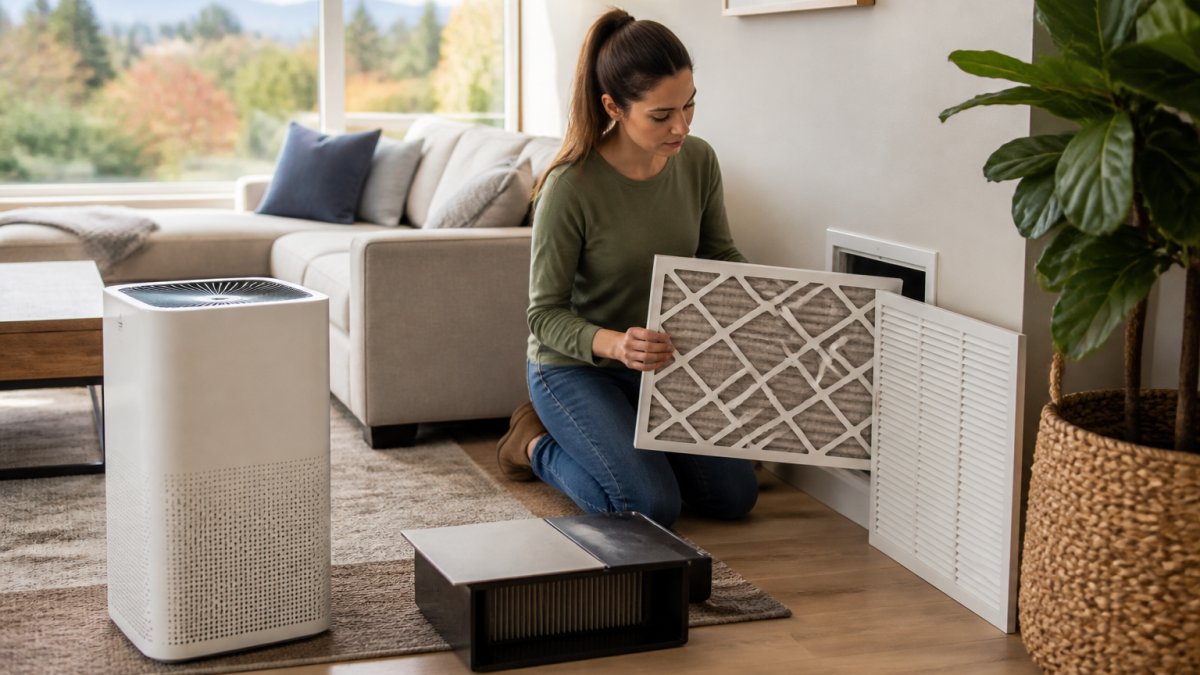
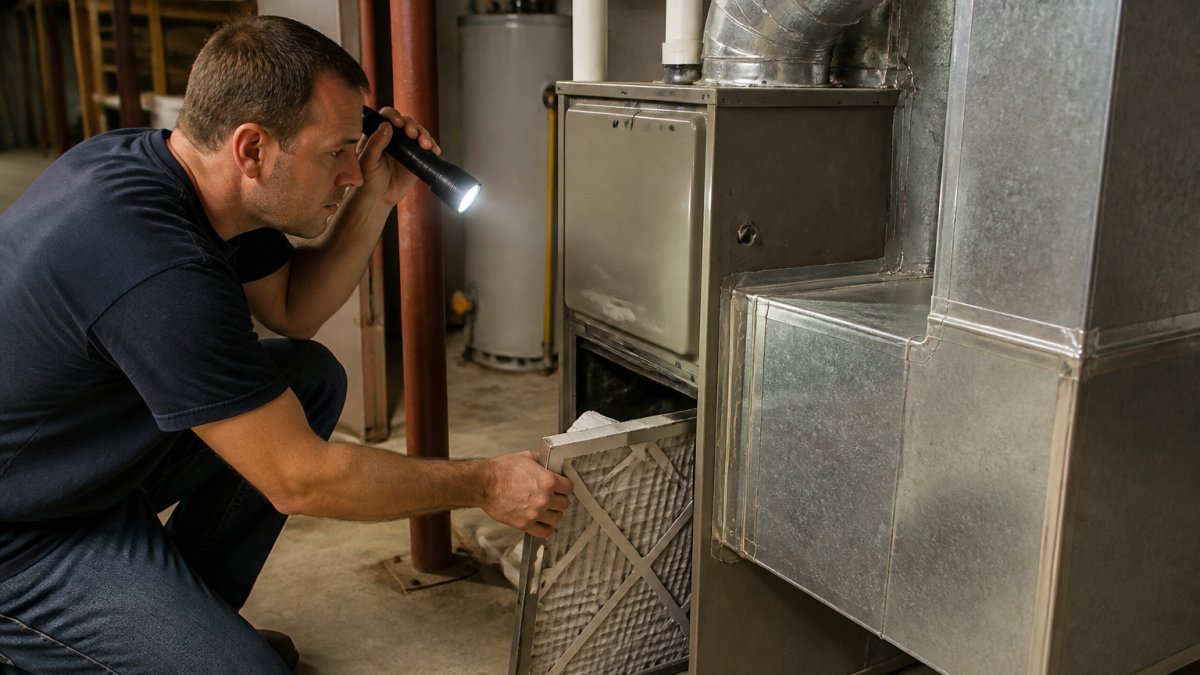
Your air filter is the easiest maintenance task and one of the most important. A clogged filter restricts airflow, reduces efficiency, and can cause the system to shut down on safety. Locate the filter (typically in a return air duct or the furnace itself) and check it. If it's visibly gray or brown with dust, it needs replacement. Standard filters should be changed every 1-3 months depending on household dust and pets. Higher-efficiency filters may last longer.
While you have the filter out, look at the ductwork around it. Do you see obvious gaps, disconnections, or crushed sections? Ductwork in attics and crawlspaces can develop leaks or be damaged by rodents or settling. You don't need to fix these yourself, but noting them tells a professional technician what to prioritize.
Feel the supply air coming from your vents. It should be noticeably warm in heating mode or cool in air conditioning mode. Lukewarm air suggests the system isn't producing enough heat or cooling, which points to a refrigerant issue, a failing compressor, or a heat exchanger problem, all requiring professional attention.
HVAC Maintenance Checklist for Year-Round Comfort
Preventive maintenance keeps your heating and cooling system running efficiently and extends its lifespan by years. A well-maintained system also costs less to operate and needs fewer emergency repairs.
Monthly tasks:
- Replace or clean your air filter (or check it and replace as needed)
- Ensure vents and returns are unobstructed
- Listen for unusual sounds (grinding, squealing, rattling) when the system runs
Seasonal tasks before winter:
- Have a professional inspect and service your furnace
- Check ductwork for visible damage or disconnections
- Verify your thermostat is accurate (use a separate thermometer to compare readings)
- Ensure your heating system has adequate clearance and ventilation
Seasonal tasks before summer:
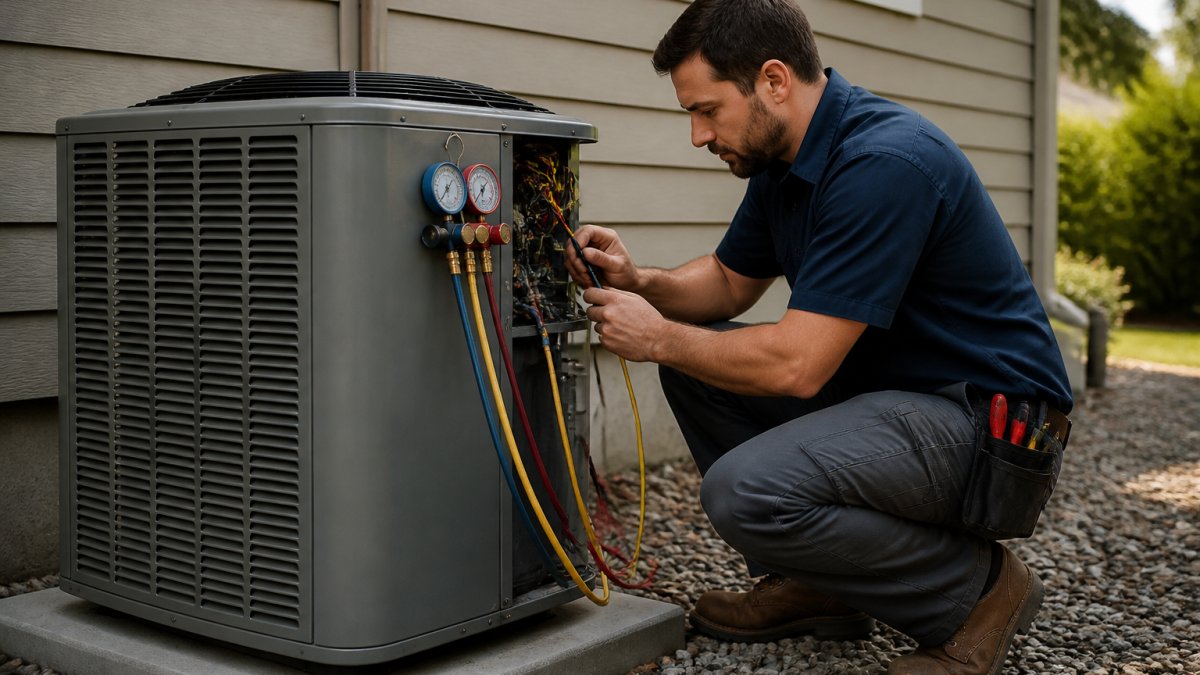
- Have your air conditioning system serviced and charged if needed
- Clean or replace air filters
- Check refrigerant lines for leaks or damage
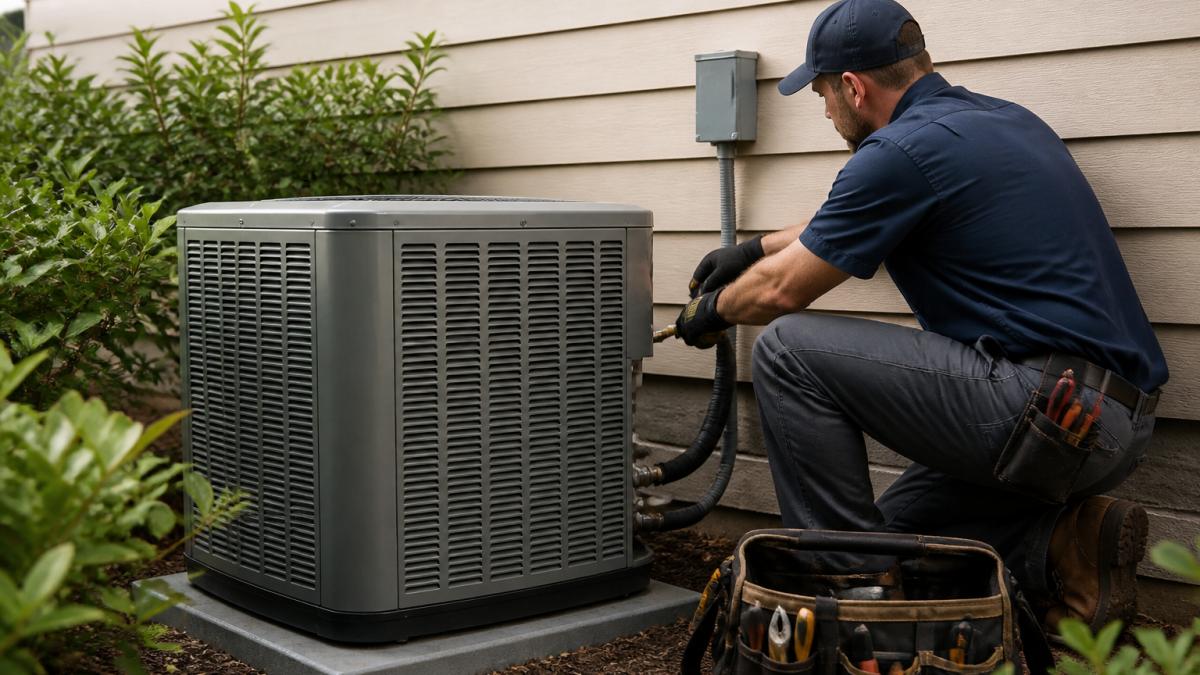
- Ensure outdoor condenser unit is clear of debris, leaves, and vegetation
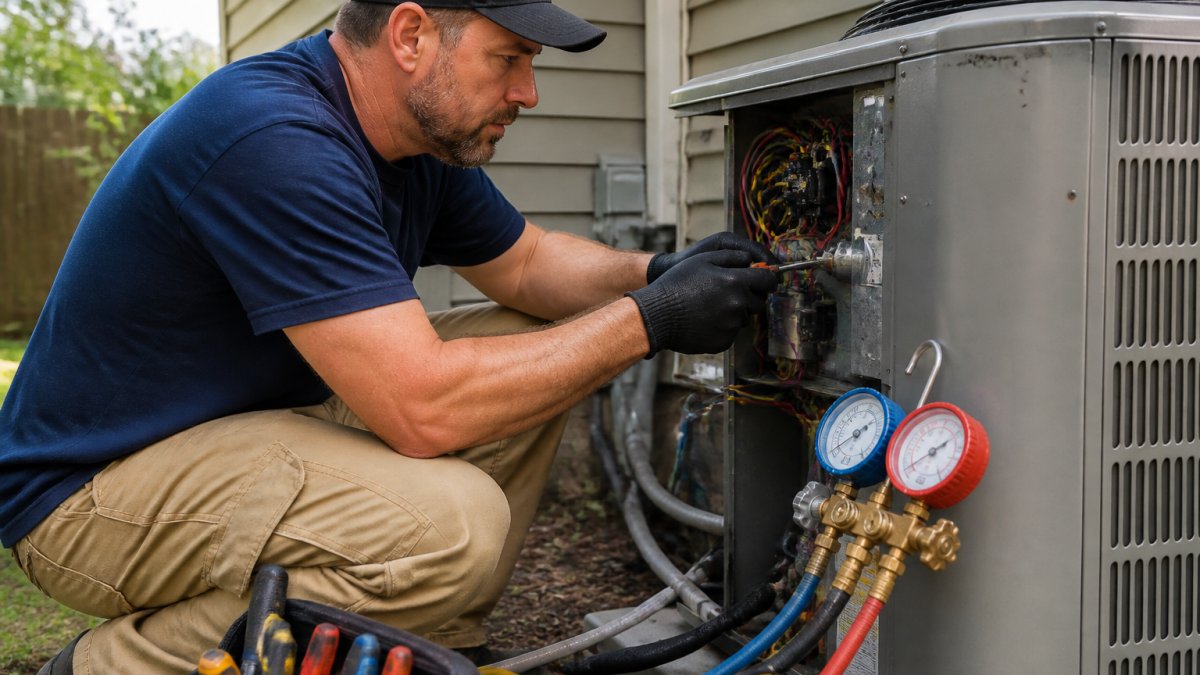
Annual professional maintenance: A yearly tune-up from a licensed HVAC contractor catches small problems before they become expensive repairs. During a maintenance visit, a technician will inspect electrical connections, test safety controls, lubricate moving parts, check refrigerant levels, and ensure your system is operating at peak efficiency. For homeowners in the Willamette Valley, scheduling this in spring (before cooling season) and fall (before heating season) aligns with regional climate demands.
Many homeowners skip maintenance to save money upfront. The cost of an emergency repair on a winter night, or a complete system replacement when a neglected unit fails, far exceeds the price of regular service.
Schedule your complimentary consultation →
Questions to Ask an HVAC Contractor Before You Hire
Not all HVAC contractors are equal. Some are fully licensed, bonded, and insured. Others operate in gray areas of the law. Some prioritize your actual needs. Others push unnecessary upgrades. Asking the right questions before you hire reveals who you're really working with.
Ask about licensing and insurance: "Are you licensed by the state?" In Oregon, HVAC contractors must be licensed. Ask for their license number and verify it with the Oregon Construction Contractors Board. "Are you bonded and insured?" Bonding protects you if the contractor fails to complete work or breaches contract terms.
Ask about the repair or installation process: "What's included in your estimate?" A detailed estimate breaks down labor, parts, and any service fees. Vague estimates hide surprises. "How long will this take?" Realistic timelines show experience. "What warranty covers this work?" Workmanship warranties typically range from 1-3 years.
Ask about their experience with your specific issue: "How many systems like mine have you serviced?" A contractor familiar with your system type and age can diagnose faster and avoid guesswork.
Ask about alternatives: "Is replacement the only option, or can this be repaired?" A contractor who immediately recommends a new system without exploring repair may be prioritizing their commission. Ask for a second opinion if the recommendation feels aggressive.
Emergency HVAC Repair and Same-Day Service Expectations
When your furnace stops heating on a January night or your air conditioning fails in July, emergency service becomes critical. Understanding what to expect helps you respond effectively and avoid panic-driven decisions.
What constitutes an emergency: A true HVAC emergency is a complete system failure during extreme weather when indoor temperatures become unsafe. A furnace that won't start in winter or an air conditioner that produces no cool air in summer qualifies.
Response time and availability: Most HVAC contractors offer 24-hour emergency service during heating and cooling seasons. Response times vary. Some promise arrival within hours. Others may take longer depending on call volume and distance.
Emergency service costs: Emergency calls typically cost more than standard service calls. After-hours labor rates, weekend premiums, and holiday charges are standard in the industry. Expect to pay a diagnostic fee upfront, which may be credited toward the repair if you proceed. Ask about this pricing structure when you call so there are no surprises.
What you can do while waiting: Check that your thermostat is set correctly and the batteries aren't dead. Verify the circuit breaker hasn't tripped. Look for obvious issues like a clogged filter or a disconnected duct. If your furnace has a reset button (usually red), try pressing it once, but only once. Multiple resets can lock out the system.
How to Choose a Licensed, Trustworthy HVAC Repair Provider
Choosing the right contractor is about more than price. It's about finding someone who understands your system, respects your budget, and stands behind their work.
Start with credentials: Verify that any contractor you're considering is licensed, bonded, and insured. In Oregon, you can check the Construction Contractors Board database online. Ask for references and actually call them.
Look for local expertise: A contractor familiar with the Willamette Valley climate understands the specific challenges your system faces. Persistent moisture in winter, temperature swings in spring and fall, and occasional heat waves in summer all demand systems and maintenance strategies tailored to this region.
Compare estimates from multiple contractors: Get at least two detailed estimates before committing. Compare what's included, the timeline, warranty terms, and total cost. The cheapest estimate isn't always the best value.
Ask about transparency: How do they explain problems? Can they show you what's wrong? A trustworthy contractor walks you through the issue, explains your options without pressure, and respects your decision. They don't use jargon to confuse you or create urgency that doesn't exist.
Valley View HVAC operates with complete transparency. We explain what we find, show you the problem when possible, and present your options clearly.
When your heating and cooling system fails, the stress of finding a trustworthy contractor shouldn't add to your burden.
Frequently Asked Questions
How do I fix inconsistent temperatures in my house?
Start by checking your thermostat setting and ensuring it's in heating or cooling mode. Verify that all vents are open and unobstructed. Examine your air filter, a clogged filter restricts airflow and causes temperature imbalances. If rooms still feel uneven after these checks, your ductwork may have leaks, or your system may need balancing. A licensed HVAC technician can perform a professional evaluation and adjust your system for consistent comfort throughout your home.
What should I check before calling for HVAC repair?
First, confirm your thermostat is set correctly and the batteries aren't dead. Check that your air filter isn't clogged and all supply vents are open. Listen for unusual sounds like grinding or squealing, and note when the problem started. Verify your circuit breaker hasn't tripped and that your outdoor unit isn't blocked by debris or ice. Document these details when you call, they help your HVAC technician diagnose the issue faster and arrive prepared with the right parts.
What makes reliable HVAC repair different from basic service?
Reliable HVAC repair combines proper diagnosis, quality workmanship, and warranty protection. A dependable contractor performs a thorough inspection before recommending repairs, uses quality parts, and stands behind their work with a clear warranty. They're licensed, bonded, and insured, meaning you're protected if something goes wrong. They also provide transparent pricing upfront and respect your time with punctual service. Reliable providers also offer maintenance plans to prevent future breakdowns and emergency support when you need it most.
How quickly can I get emergency HVAC repair during extreme weather?
Response times vary by provider and demand, especially during peak heating or cooling seasons. Many local HVAC companies offer same-day or 24-hour emergency service, but availability depends on current workload. When you call, ask specifically about response time expectations and whether there's an emergency fee. Having a maintenance relationship with a trusted provider often prioritizes your call. For extreme weather situations, calling early in the day increases your chances of same-day service before conditions worsen.