 How-to
HVAC Maintenance Tips for Seniors Who Want Safe, Comfortable Homes
Quick Summary
HVAC maintenance for seniors means following a simple seasonal schedule that keeps the heating and cooling system efficient, the air clean, and the home safe. Check and replace the air filter monthly, keep vents and the outdoor unit clear, and book a professional tune-up each spring and fall.
- Hold the air filter up to a light monthly and replace it if no light passes through.
- Clear leaves and debris from the outdoor unit every three months using a long-handled rake.
- Test carbon monoxide and smoke alarms every three months, using a broom handle if reaching is hard.
- Book a professional tune-up twice a year, before heating and cooling seasons begin.
- Ask for a written estimate before any work begins, and confirm whether the diagnostic fee is separate.
Table of Contents
- Why HVAC Maintenance Matters More as You Age
- Step 1: Set Up a Simple Seasonal Maintenance Schedule
- Step 2: Check and Replace Your Air Filter Safely
- Step 3: Keep Vents, Registers, and the Outdoor Unit Clear
- Step 4: Check Your Thermostat and Watch for Warning Signs
- Gas Furnace Maintenance Checklist for Senior Homeowners
- When to Call a Professional and What Annual Service Costs
- Booking Your Next HVAC Service Visit With Valley View HVAC
- Frequently Asked Questions
Why HVAC Maintenance Matters More as You Age
Keeping your heating and cooling system in good shape matters at any age, but it matters more as you get older. A furnace or air conditioner that quietly loses efficiency can leave a home too cold, too hot, or too stuffy. For seniors, those problems can turn into real health risks.
As people age, their bodies handle temperature changes less well. Many older adults feel the cold more, and heat stress can build up fast on a hot day. Poor air quality can also aggravate breathing problems. Good hvac maintenance keeps the system running steadily so the indoor air stays comfortable and clean.
This guide walks through a simple plan you can follow, step by step. It covers scheduling, filters, airflow, thermostat checks, and when to call in a professional. At Valley View HVAC, we see the same questions from homeowners again and again, so we wrote this guide to answer them clearly.
Step 1: Set Up a Simple Seasonal Maintenance Schedule
The easiest way to stay on top of hvac maintenance is to put it on a calendar you can actually see and reach.
Start with a large-print wall calendar or a phone reminder set to a loud alert. Pair each task with something you already do, such as paying a bill on the first of the month or changing the clocks.
Here is a simple monthly and seasonal plan you can copy onto a sheet of paper in large print:
Every month
- Look at the air filter (or ask a helper to). Hold it up to a light, if you cannot see light through it, replace it.
- Walk each room and confirm no furniture, rug, or curtain covers a vent or register.
- Glance at the outdoor unit from a safe distance to confirm nothing is stacked against it.
Every 3 months
- Clear leaves, grass clippings, and dirt from around the outdoor unit, use a long-handled rake or broom so you do not have to bend or kneel.
- Wipe the thermostat display and confirm the settings match the season.
- Test carbon monoxide alarms and smoke alarms with a broom handle or a helper if reaching is hard.
Twice a year (spring and fall)
- Book a professional tune-up before the heating or cooling season starts.
- Ask a helper to rinse the outdoor fins gently with a garden hose, power off.
- Review your filter size and buy a small stock so you are not caught short.
Once a year
- Have a technician inspect coils, electrical connections, the condensate drain, and safety controls.
- Review your maintenance plan and any senior or community discounts before you renew.
Write these dates where you will see them, and tell a family member or caregiver which tasks you handle and which ones you want help with. A shared calendar, paper or digital, keeps everyone on the same page without making the work feel technical.
Watch out: A missed filter change is the most common reason systems lose efficiency between service visits, and a reminder you cannot see or hear is a reminder you will miss.
The article lays out a schedule you can follow, with tasks grouped by how often they need doing.
| Frequency | Task | Note |
|---|---|---|
| Every month | Check the air filter and replace it if no light passes through | Hold it up to a light |
| Every month | Confirm no furniture or curtains cover vents | Walk each room |
| Every 3 months | Clear leaves and debris from the outdoor unit | Use a long-handled rake |
| Every 3 months | Test carbon monoxide and smoke alarms | Use a broom handle if reaching is hard |
| Twice a year | Book a professional tune-up before the season starts | Spring and fall |
| Once a year | Have a technician inspect coils, connections, drain and safety controls | Review your maintenance plan |
Step 2: Check and Replace Your Air Filter Safely
The air filter is the simplest part of your system to check, and it has a big effect on airflow. A clogged filter makes the system work harder, uses more energy, and can lead to a frozen coil or overheating.
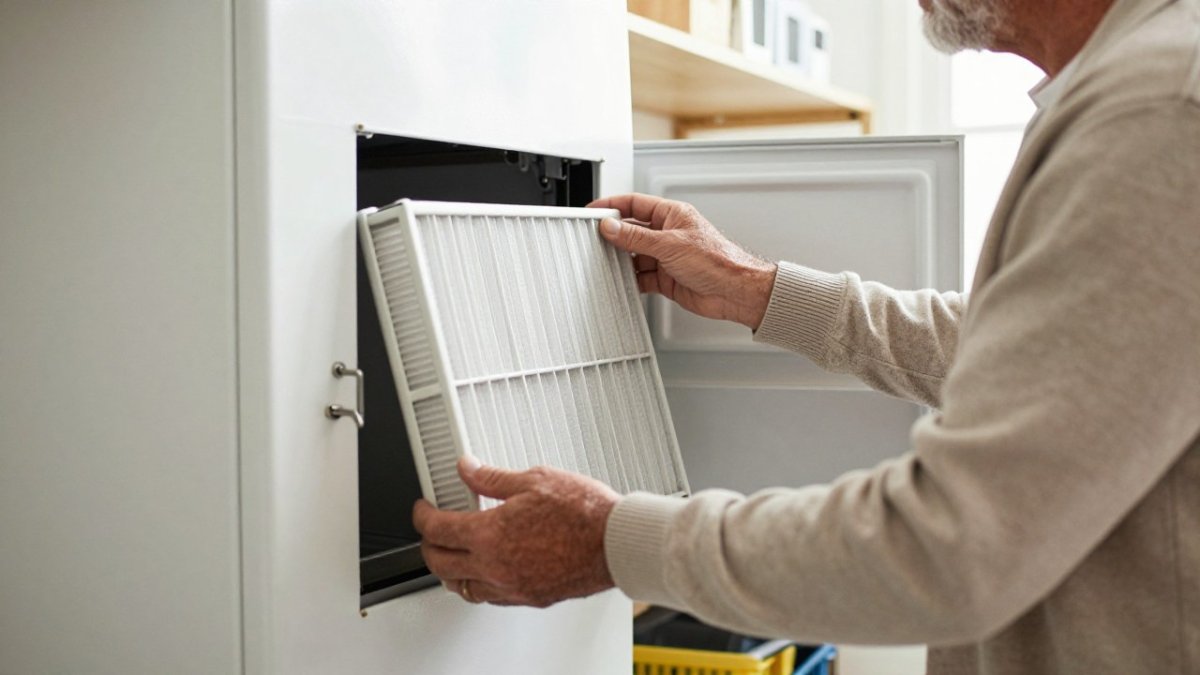
To check the filter:
- Turn the thermostat to "off" before you open anything.
- Find the filter slot, usually at the return air grille or the furnace cabinet.
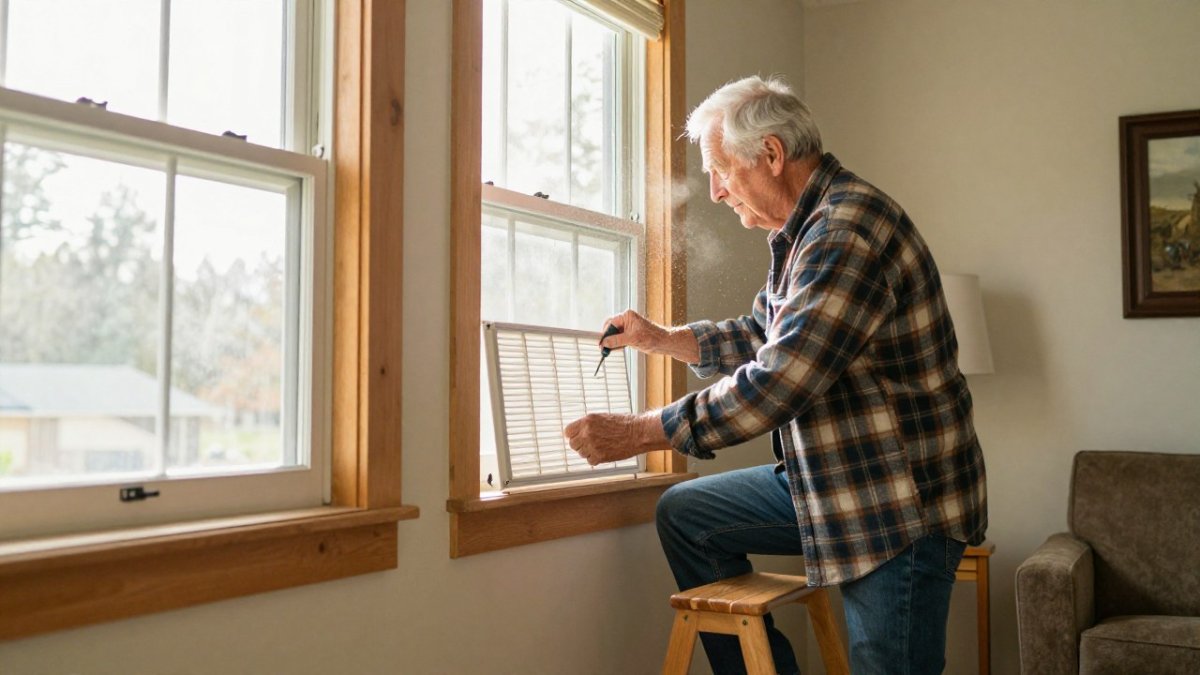
- Slide the filter out and hold it up to a light. If you cannot see light through it, replace it.
- Note the size printed on the frame so you buy the right one.
- Slide the new filter in with the airflow arrow pointing toward the blower.
Keep a small stock of replacement filters in a dry place. Buy them in the exact size you need, and ask for help from a family member or a service technician if the slot is hard to reach.
Step 3: Keep Vents, Registers, and the Outdoor Unit Clear
Good airflow depends on nothing blocking the path. Furniture, rugs, and curtains can cover vents and registers and push your system off balance. Check each room and make sure air can move freely.
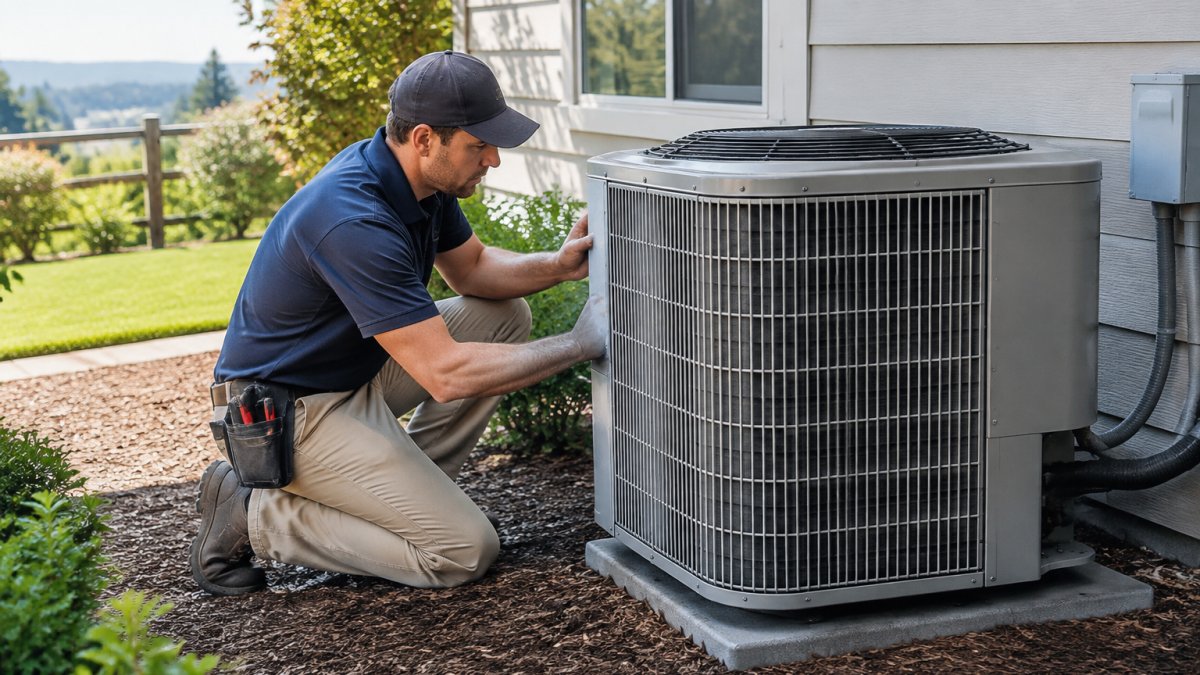
Outside, the condenser or outdoor unit needs clear space around it. Take these steps every few months:
- Remove leaves, grass clippings, and dirt from around the unit.
- Keep bushes and plants at least two feet away from the sides.
- Rinse the outside of the fins gently with a garden hose, with the power off.
- Do not use a pressure washer, since it can bend the delicate fins.
Never climb on the unit or reach into its interior. If the fins are badly bent, or the unit is making unusual noises, call a professional instead of trying to fix it yourself.
Step 4: Check Your Thermostat and Watch for Warning Signs
Your thermostat controls how often your system runs. Taking a minute to review its settings can save energy and keep the house comfortable.
Look for these simple checks:
- Confirm the thermostat is set to a comfortable temperature for the season.
- Use an "auto" fan setting so air circulates only when needed.
- Make sure the thermostat is not near a window, lamp, or heat source that could give a false reading.
Also watch for warning signs that something is wrong:
- Rooms that stay too hot or too cold no matter how the thermostat is set.
- Unusual noises such as grinding, squealing, or banging.
- Water pooling near the indoor unit or the condensate drain line.
- A musty smell coming from the vents.
- Energy bills that rise without a clear reason.
Any of these signs is worth a call to a professional. Catching a small problem early is far cheaper than waiting for a breakdown.
Gas Furnace Maintenance Checklist for Senior Homeowners
If your home has a gas furnace, a short checklist can help you stay safe between service visits. Many people search for a gas furnace maintenance checklist because the work involves fuel and combustion, so it helps to know what to watch.
- Replace or check the air filter.
- Clear the area around the furnace of boxes, rags, and stored items.
- Make sure the vents and flue pipes are not blocked by snow or debris.
- Listen for a steady burner sound rather than popping or rumbling.
- Check that the thermostat responds when you raise and lower the setting.
- Install carbon monoxide alarms on each level of the home, and test them monthly (CO Alarms).
- Note any gas smell, yellow or flickering flames, or soot around the unit.
If you smell gas, leave the home right away and call your gas utility or 911 from outside (Recognizing and Responding to Pipeline Emergencies | Stakeholder Communications). Do not turn lights on or off, and do not use a phone inside the house.
When to Call a Professional and What Annual Service Costs
Some tasks should always go to a trained technician. Call a professional if you notice:
- Gas odors, soot, or a yellow or flickering burner flame.
- Carbon monoxide alarm activity.
- Electrical problems such as burning smells, sparks, or breakers that trip often.
- Refrigerant leaks, which often show up as ice on the lines or weak cooling.
- Persistent water leaks or a clogged condensate drain.
- Any issue that remains after you have checked the filter and airflow.
An annual professional service usually includes cleaning key components, checking electrical connections, testing safety controls, and confirming the system runs efficiently. Prices vary by region, system type, and the scope of work, so ask for a written estimate before any work begins.
Before you book, ask these questions:
- Is the tune-up price flat, or does it change based on what the technician finds?
- What exactly is included, filter, coils, drain line, safety controls?
- Is there a separate diagnostic fee if a repair is needed?
- Do you offer a maintenance plan, and what does it cover between visits?
- Are there senior, veteran, or community discounts, and how do I qualify?
If cost is a concern, ask about senior discounts and payment options when you call.
If you use a caregiver or family member to help manage appointments, keep a folder with past invoices, the maintenance plan, and the filter size so anyone helping you has the details in one place.
Watch out: A quote that changes after the technician arrives is a common source of surprise bills, ask for the estimate in writing before work starts, and confirm whether the diagnostic fee is separate from the repair.
Booking Your Next HVAC Service Visit With Valley View HVAC
Regular hvac maintenance is one of the best ways to keep a home safe and comfortable through every season. Following the schedule, checking the filter, keeping airflow clear, and watching for warning signs will go a long way.
When you are ready for a professional visit, Valley View HVAC is here to help. Our licensed, bonded, and insured team has over 20 years of combined construction trades experience, and every service comes with a 2-year workmanship warranty. Schedule your complimentary consultation today and we will walk through your system, answer your questions, and build a maintenance plan that fits your home.
Frequently Asked Questions
What HVAC maintenance can seniors safely do themselves?
Most seniors can safely handle the simplest tasks: checking and replacing the air filter, keeping supply vents and return grilles free of furniture and rugs, clearing leaves and debris at least two feet from the outdoor unit, and checking that the thermostat is set to a comfortable temperature with the fan on auto. Avoid opening the furnace panel, working on electrical components, or touching refrigerant lines. Those tasks belong to a licensed technician.
How often should an HVAC system be serviced?
Most homeowners should schedule professional service once a year, ideally in the spring for cooling and in the fall for heating. Check and replace filters every one to three months depending on the filter type and whether pets or dust are present. A yearly visit lets a technician inspect coils, electrical connections, the condensate drain line, and overall system performance, which helps catch small problems before they cause a breakdown during extreme weather.
How much does yearly HVAC maintenance cost?
Valley View HVAC has not published standard maintenance pricing, and the cost depends on the type of system, its age and condition, and what the visit includes. For current pricing or a quote, contact Valley View HVAC directly or visit the website. Ask whether the visit includes a senior discount, since Valley View offers community discounts for seniors, veterans, educators, and first responders.
When should you call a professional for HVAC maintenance?
Call a licensed professional if the system short cycles, makes grinding or banging noises, produces a burning smell, fails to heat or cool, leaks water, or if the furnace pilot or igniter behaves unusually. Any suspected gas leak or carbon monoxide alarm requires you to leave the home and call the gas utility or emergency services first. Those are not tasks to attempt yourself.