 How-to
7 Ways to Reduce HVAC Energy Bills Without Sacrificing Comfort
Last Updated: November 12, 2026
Quick Summary
To reduce HVAC energy waste, diagnose first: compare three months of bills, check the filter, feel for drafts, and note uncomfortable rooms before spending on fixes. Then adjust thermostat setbacks, change filters monthly, and seal air leaks and ducts before considering new equipment.
- Set the thermostat to 75-78°F at home in summer and 80-82°F away or asleep.
- Check air filters monthly and change them more often in homes with pets or heavy dust.
- Seal ducts with UL-listed foil tape or duct mastic, never cloth-backed duct tape.
- Duct sealing in unconditioned space can cut heating and cooling costs roughly 10-20%.
- DIY is fine for filters, weatherstripping, and thermostat schedules; refrigerant, gas, and electrical work need a pro.
Table of Contents
- Start With a Diagnostic Workflow, Not a Random Checklist
- Why Is My HVAC Using So Much Electricity?
- Dial In Thermostat Settings to Save Energy
- Air Filters, Airflow, and the Cheapest Fix You Can Make
- Seal Air Leaks and Duct Leakage Before You Upgrade Equipment
- Use an HVAC Energy Savings Calculator to Set Realistic Expectations
- When to Consider Energy-Efficient Heating and Cooling Systems for Homes
- DIY vs. Professional Work: Where to Draw the Line
- Frequently Asked Questions
Start With a Diagnostic Workflow, Not a Random Checklist
Most homeowners attack high energy bills by guessing: swap a filter, nudge the thermostat, hope for the best.
A common pattern is a homeowner spending on upgrades while a crushed return duct quietly strangles airflow, so the system runs longer and the bill climbs.
Here is the workflow we recommend, in order:
- Pull the last three energy bills and compare month to month.
- Check the air filter and note its condition.
- Walk the house and feel for drafts near windows, doors, and outlets.
- Listen to the system at startup and shutdown.
- Note which rooms never feel comfortable.
This sequence costs nothing and tells you where the money is leaking. A step-by-step professional inspection checklist goes deeper.
Why Is My HVAC Using So Much Electricity?
Your HVAC uses so much electricity because it runs longer than it should, works against restricted airflow, or fights a house that leaks air. Each forces the system to draw more power for the same comfort.
A few common culprits:
- A clogged filter. Restricted airflow makes the blower run longer.
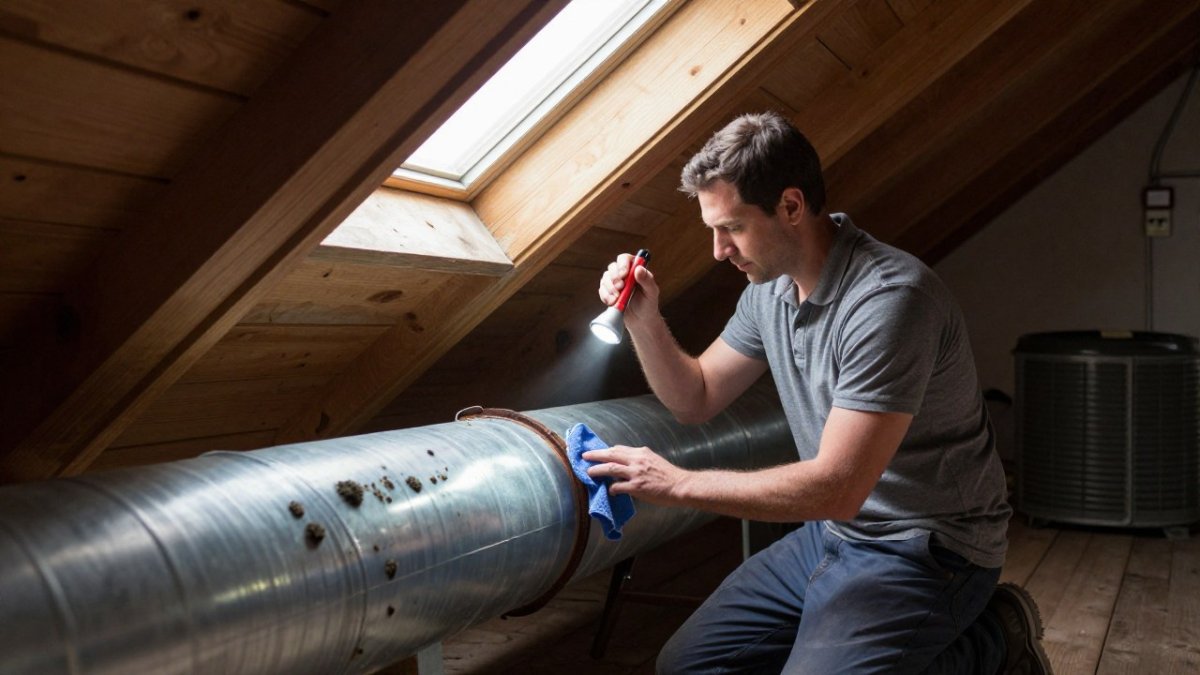
- Duct leakage. Conditioned air escapes into attics and crawlspaces before it reaches a room.
- Air leaks around doors and windows. Your system heats or cools air that slips right back outside.
Watch out: homeowners often replace a system when the real problem is a $15 filter or a disconnected duct. Diagnose first, spend second.
Dial In Thermostat Settings to Save Energy
Thermostat settings to save energy are simple: warmer in summer, cooler in winter when you are away or asleep.
Try these settings as a starting point:
- Summer, at home: 75-78°F
- Summer, away or asleep: 80-82°F
- Winter, at home: 68-70°F
Cranking the thermostat way down to cool a room fast does not cool faster. It just runs the system longer and costs more.
Programmable vs. Smart Thermostats
A programmable thermostat follows a fixed schedule you set once. A smart thermostat learns your patterns and adjusts on its own, often with remote control through a phone app.
Which one fits you?
| Feature | Programmable | Smart |
|---|---|---|
| Setup | Manual schedule | Learns over time |
| Remote control | No | Yes, via app |
| Best for | Fixed routines | Busy or changing schedules |
| Cost | Lower | Higher |
If your schedule is predictable, a programmable unit does the job. If your days vary, a smart thermostat earns its price back through consistent savings.
Air Filters, Airflow, and the Cheapest Fix You Can Make
Replacing a dirty air filter is one of the cheapest ways to cut HVAC energy use.
Check your filter monthly. Homes with pets or heavy dust need more frequent changes.
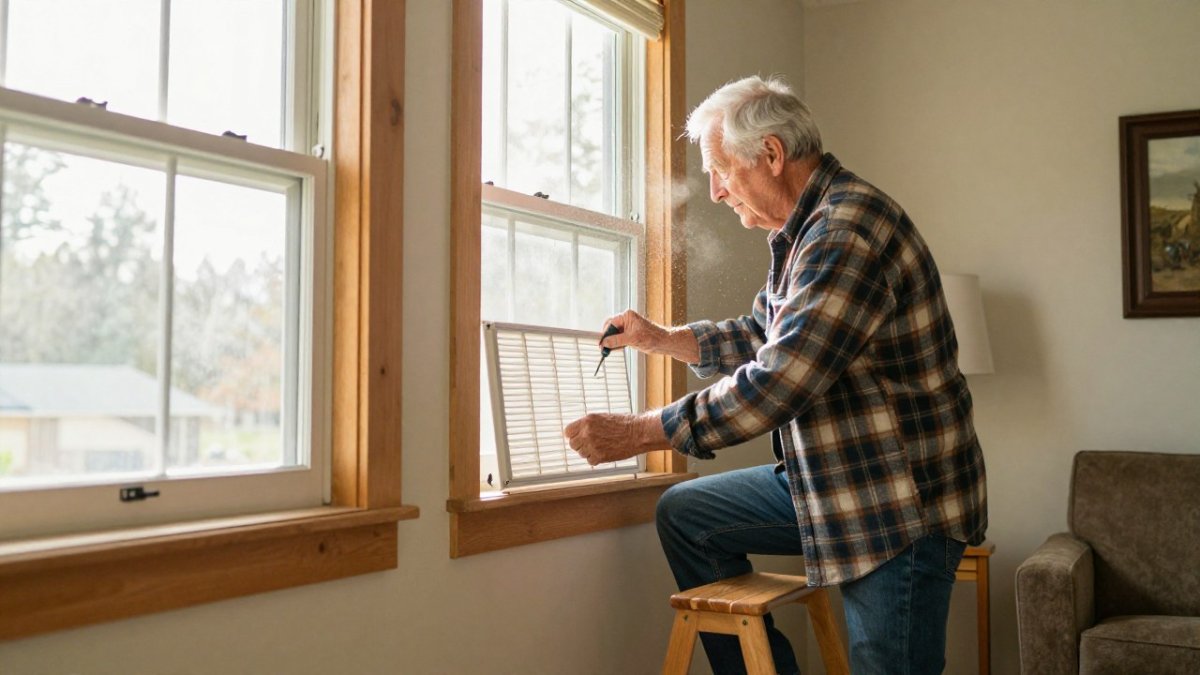
Filter replacement is a five-minute job:
- Turn the system off.
- Slide out the old filter and note the size printed on the frame.
- Match the airflow arrow to the direction of air travel.
- Slide in the new filter and close the cover.
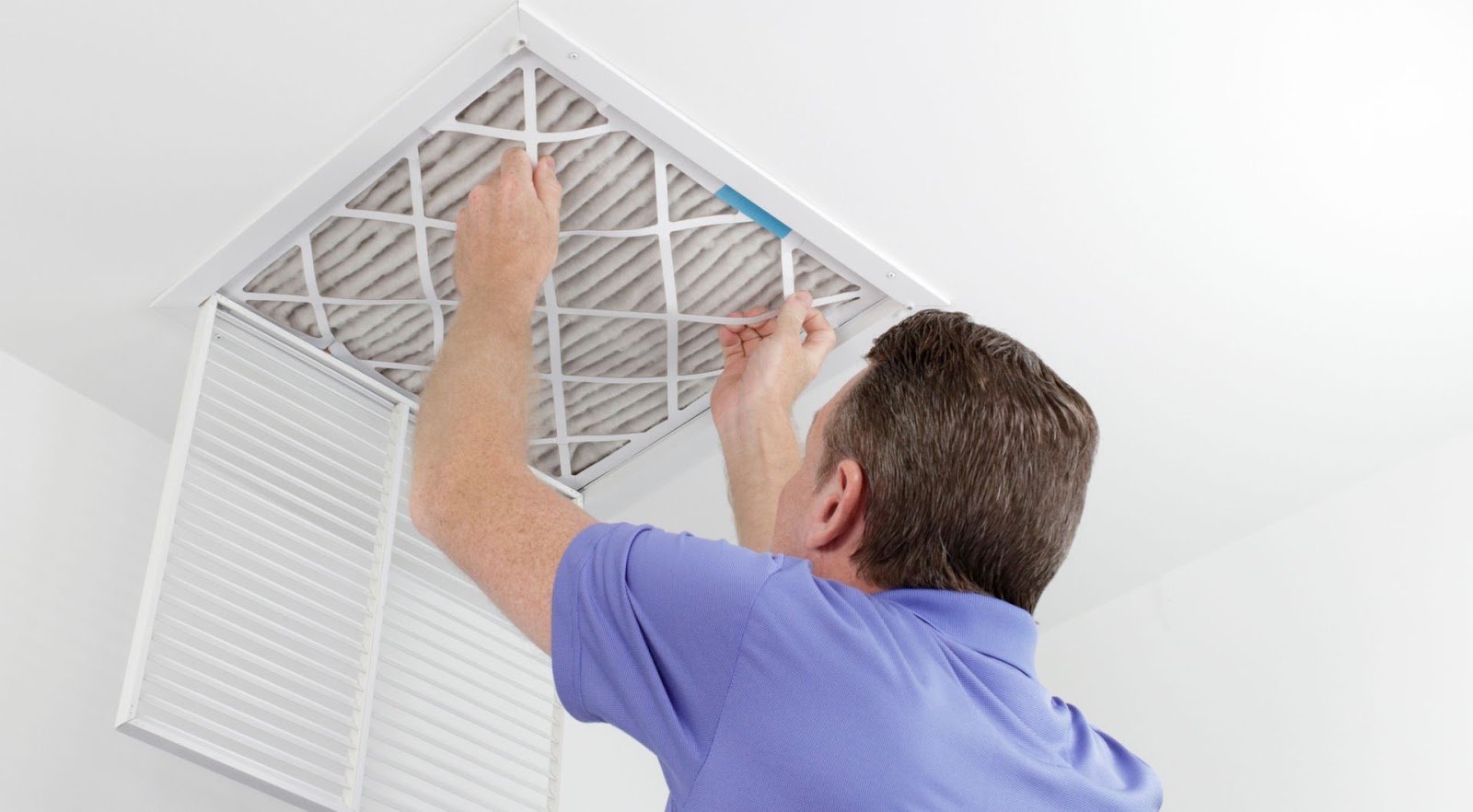
What most guides miss: the filter is not the only airflow problem. Blocked return vents, closed registers, and furniture against grilles strangle airflow the same way.
Seal Air Leaks and Duct Leakage Before You Upgrade Equipment
Sealing air leaks and duct leakage comes before any equipment upgrade. A high-efficiency system attached to leaky ducts and a drafty house cannot deliver its rated performance.
Start with the easy envelope fixes:
- Weatherstrip doors and windows.
- Caulk gaps around pipes, vents, and outlets.
- Add outlet gaskets on exterior walls.
Then look at the ducts. Duct leakage in attics and crawlspaces is common, and sealed ducts keep conditioned air where it belongs.
Watch out: sealing ducts with the wrong tape or mastic can fail within a season. Use UL-listed foil tape or duct mastic, not cloth-backed "duct tape."
Use an HVAC Energy Savings Calculator to Set Realistic Expectations
An HVAC energy savings calculator gives you a rough estimate of what each fix might save before you spend a dollar. It will not be exact, but it keeps you from overpaying for small gains.
Most calculators ask for:
- Square footage and home age
- Current energy usage and rates
- Equipment type and age
Treat the output as a range, not a promise. Savings depend on climate, home condition, and how you use the system: the same fix produces very different results in a tight, well-insulated house versus a drafty one with leaky ducts.
Realistic Savings Ranges by Action
Savings depend on climate severity, home size, equipment condition, and how aggressively you change behavior. For current equipment pricing and a home-specific estimate, contact Valley View HVAC or visit our website for a quote.
| Action | Typical annual bill reduction | Main assumptions |
|---|---|---|
| Thermostat setbacks (7-10°F for 8 hours) | Roughly 5-15% of heating and cooling costs | Consistent schedule, no heat pump with aggressive setbacks |
| Filter changes on schedule | Small but steady, often under 5% | Filter was previously neglected |
| Air sealing (weatherstripping, caulk, outlet gaskets) | Roughly 5-10% of heating and cooling costs | Leaks are measurable, work is thorough |
| Duct sealing in unconditioned space | Roughly 10-20% of heating and cooling costs | Ducts are in attic or crawlspace and visibly leaky |
| Attic insulation upgrade | Roughly 10-20% of heating and cooling costs | Insulation is below current recommended levels |
| High-efficiency equipment replacement | Roughly 10-25% of heating and cooling costs | Right-sized unit, ducts and envelope already addressed |
These figures overlap because the actions interact. Sealing ducts in a leaky attic without improving insulation leaves savings on the table, and a new high-efficiency system attached to leaky ducts will underperform its rating.
Separate Potential Savings From Guaranteed Results
A calculator estimates potential savings under average conditions. Guaranteed results require measurement in your own home. Before you spend on a major upgrade, ask three questions:
- What assumptions is this estimate based on, and do they match my house?
- Is the estimate weather-normalized, or does it compare a mild month to a harsh one?
- What is the payback period at my actual utility rate, not a national average?
If a contractor quotes a specific savings percentage without a home assessment, treat it as marketing rather than engineering.
Measure Results After Changes
Pull twelve months of utility bills before you make changes and note the heating and cooling degree days for each month, which many utilities print on the bill or publish online.
Envelope fixes and thermostat discipline usually deliver steady, modest savings. Equipment upgrades cost more upfront and pay back over years.
Typical annual bill reduction by HVAC action
When to Consider Energy-Efficient Heating and Cooling Systems for Homes
Energy-efficient heating and cooling systems for homes make sense when your current equipment is aging, failing, or badly matched to the house. A right-sized, high-efficiency system can cut energy usage, but only after the cheaper fixes are done. This section gives equal weight to the heating season and to heat pumps, which behave differently from a furnace and air conditioner pair.
Signs it may be time:
- The system is 12-15 years old and needs frequent repairs.
- Bills keep climbing with no change in habits.
- Rooms never balance, no matter the thermostat setting.
Heating-Season and Heat-Pump Considerations
A furnace and a heat pump do not respond the same way to thermostat changes.
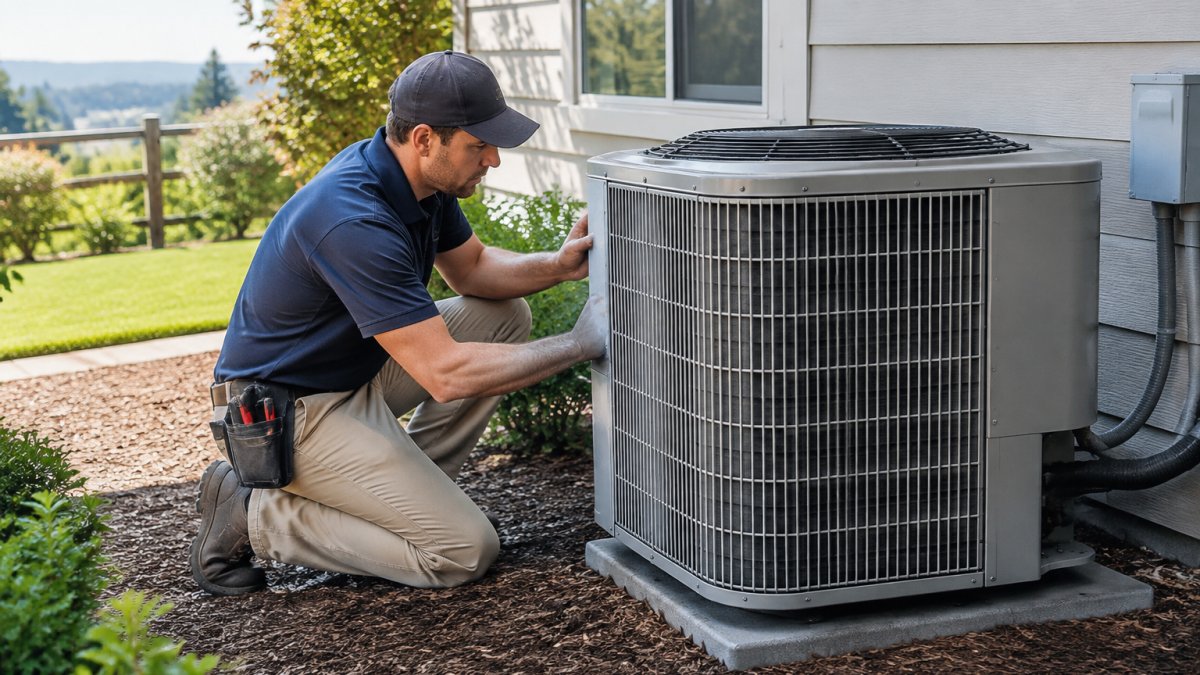
In heating mode, check that the outdoor unit stays clear of snow and debris, that the defrost cycle runs normally, and that auxiliary heat is not running when it should not be.
For furnaces, the heating-season checklist is different: a clean burn is a safety issue, not just an efficiency one.
Incentives, Rates, and Billing Plans
Equipment efficiency is only part of the bill; utility rate design matters just as much. Time-of-use rates charge more during peak hours, so shifting laundry, dishwashing, and EV charging off-peak can lower bills without touching the HVAC system. Some utilities also apply demand charges based on your highest usage interval, which rewards steady operation over short bursts.
Before you buy, check what is available:
- Utility rebates for high-efficiency equipment, often tied to efficiency ratings and proper sizing.
- Federal tax incentives for qualifying heat pumps and insulation, which change over time and have caps.
- State and local programs, which vary widely and may include income-qualified assistance.
- Manufacturer promotions, which are separate from government incentives and can stack.
A Decision Framework
Use this order before committing to equipment:
- Fix airflow and filtration.
- Seal the envelope and the ducts.
- Improve insulation where it is below recommended levels.
- Confirm the existing equipment is right-sized and in good repair.
- Only then compare high-efficiency replacement options, including heat pumps where the climate and electrical service support them.
For a deeper look at how upgrades cut costs, see our guide on cutting energy costs with commercial HVAC upgrades. The same logic applies at home.
Valley View HVAC designs systems for the local climate, so the system matches the house instead of guessing.
DIY vs. Professional Work: Where to Draw the Line
DIY work is fine for filters, weatherstripping, and thermostat schedules.
Here is where we would draw it:
| Task | DIY or Pro | Why |
|---|---|---|
| Filter changes | DIY | Simple, low risk |
| Weatherstripping and caulk | DIY | No special tools |
| Thermostat programming | DIY | Follow the manual |
| Duct sealing | Pro | Needs the right materials |
| Refrigerant work | Pro | Licensed and regulated |
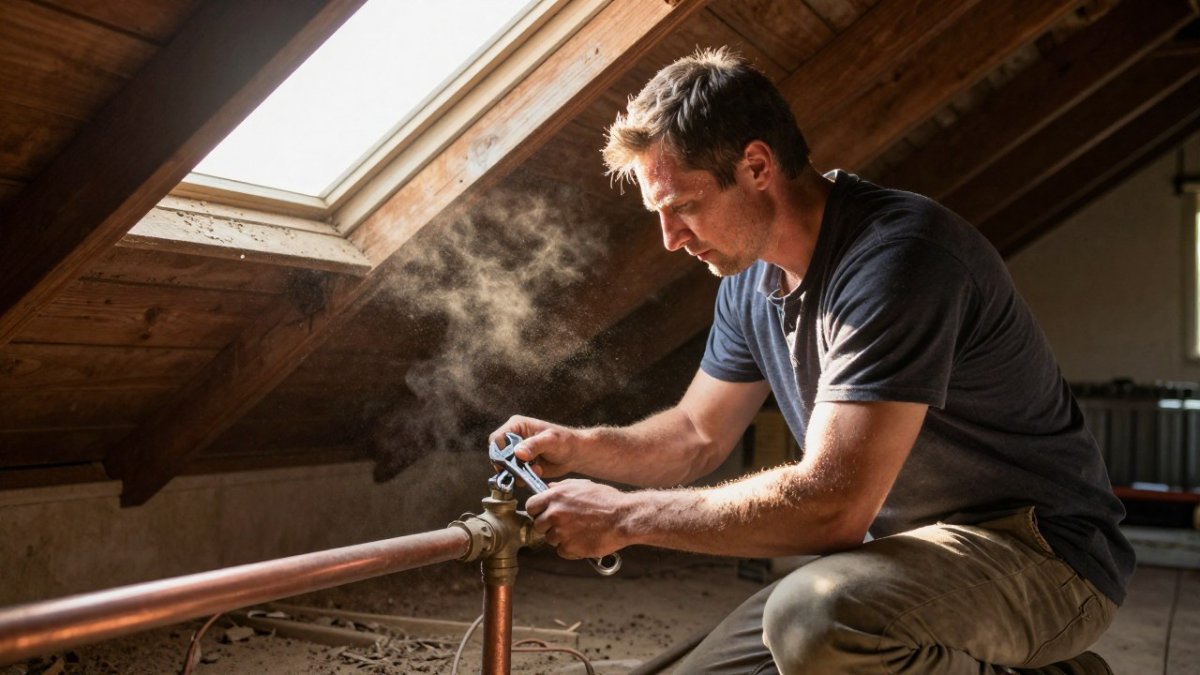
| Electrical or gas repairs | Pro | Safety risk |
Refrigerant handling is regulated, and gas and electrical work carry real safety risk.
If you are unsure where a task falls, ask. Valley View HVAC is fully licensed, bonded, and insured.
High energy bills rarely trace back to one big problem.
Valley View HVAC designs systems for the local climate and backs installs with a 2-year workmanship warranty.
Frequently Asked Questions
What thermostat settings help lower heating and cooling bills?
Set your thermostat to 68°F when you're awake and at home during heating season, and lower it 7-10°F while you sleep or are away. In summer, aim for 78°F when home and raise it 7-10°F when out. A programmable or smart thermostat automates these setbacks so you don't have to remember. Avoid large swings that force the system to run longer to recover.
How often should I change my HVAC air filter to improve efficiency?
Check your filter monthly and replace it every 1-3 months for standard 1-inch filters, or every 6-12 months for thicker media cabinets. Homes with pets, smokers, or heavy dust need more frequent changes. A clogged filter restricts airflow, forcing the blower to work harder and raising energy usage. Write the install date on the filter edge so you don't lose track. If you can't see light through the filter when held up, it's overdue.
Can HVAC maintenance help reduce energy bills?
Yes. An annual tune-up keeps coils clean, refrigerant charged correctly, and blower components lubricated, all of which affect how many watts the system draws per hour of runtime. A system checkup also catches small issues like a failing capacitor or loose belt before they turn into emergency repairs. Schedule maintenance in spring for cooling and fall for heating so the system is ready before peak demand. Valley View HVAC offers community-discounted maintenance for seniors, veterans, educators, and first responders.
How can I tell whether my HVAC system needs repair or replacement?
Repair usually makes sense if the system is under 10-12 years old, the repair costs less than a third of replacement, and efficiency hasn't dropped sharply. Replacement is worth considering when you face frequent repairs, rising electric bills with no other explanation, refrigerant types that are being phased out, or a system over 15 years old. A Manual J load calculation and duct inspection will confirm whether a right-sized high-efficiency system would actually save you money in your home.