 How-to
How to Stop Mold in HVAC Ducts: Prevention and Safe Removal
Last Updated: November 26, 2026
Quick Summary
Mold in HVAC ducts grows when moisture, dust, and warmth collect together, so stopping it starts with controlling humidity and fixing condensate drainage. Keep indoor humidity moderate, keep drains clear, seal duct leaks, and fix the moisture source before cleaning. Clean only small surface growth yourself.
- Keep indoor humidity at moderate levels, and use a dehumidifier in damp areas if needed.
- Check the condensate drain and drain pan periodically for standing water or buildup.
- Seal visible duct joints and schedule routine HVAC inspections.
- Duct cleaning is generally warranted only when visible growth or confirmed contamination exists.
- Stop DIY cleaning and call a professional if mold covers more than about 10 square feet.
Table of Contents
- What Causes Mold in HVAC System Components
- Mold in HVAC System Symptoms and How to Tell It Apart From Dust
- How to Prevent Mold in AC Unit and Ductwork
- Step-by-Step: Cleaning Visible Mold Around Vents and Duct Interiors Safely
- HVAC Mold Removal Cost: What Affects the Price
- Booking a Mold Inspection and Duct Assessment With Valley View HVAC
- Frequently Asked Questions
What Causes Mold in HVAC System Components
Mold in HVAC ducts grows when moisture, dust, and warmth come together in the same place. Any damp spot in a closed air system can turn into a colony. Knowing the causes is the first step to stopping mold in HVAC ducts for good.
Mold needs three things to grow: moisture, a food source like dust or paper debris, and time. Ducts provide all three. EPA guidance on mold and moisture in buildings
How excess humidity and condensation feed growth
Humidity is the biggest driver. When indoor humidity stays above about 60%, mold has what it needs to start. Cold supply ducts and the evaporator coil can sweat, and that water sits in the system.
Common sources of extra moisture:
- Cold air ducts running through hot, humid spaces
- A condensate drain pan that holds standing water
- Humid outdoor air pulled in through leaks
- Showers, cooking, and laundry that raise indoor moisture
Leaky ducts, poor insulation and drain pan problems
Leaks pull attic, crawl space, or wall air into the ducts. That air often carries moisture and dust. Poor insulation lets cold ducts sweat, and a clogged or cracked drain pan lets water pool next to the coil.
Mold in HVAC System Symptoms and How to Tell It Apart From Dust
Mold in HVAC systems often shows up in ways that are easy to miss. Dust, soot, and mineral stains can look similar at first glance, so it helps to know what to check.
Visible signs around vents, registers and the air handler
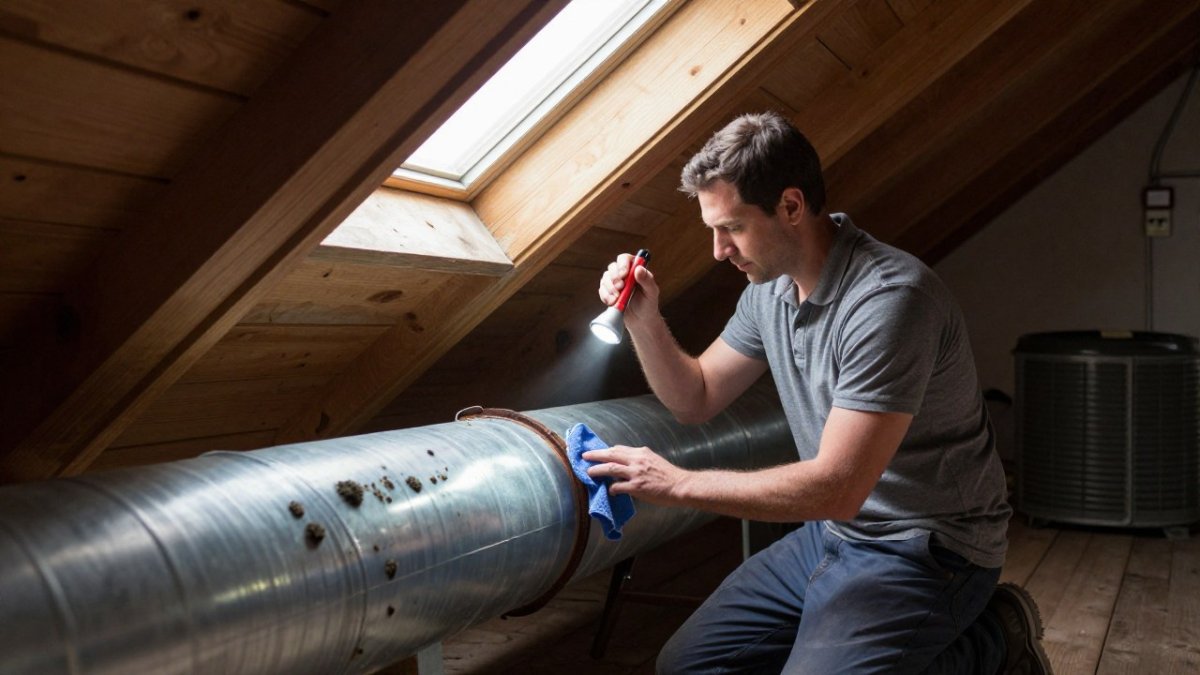
Look for fuzzy or powdery patches in green, black, white, or gray. Check the inside edges of vent covers, the back of registers, and the cabinet around the air handler. Mold tends to cluster where water collects or stays damp.
Musty odors, allergy-like symptoms and when to suspect mold versus dust or soot
A musty smell that gets stronger when the system runs is a common warning sign. Some people notice sneezing, itchy eyes, or stuffy noses that improve when they leave the house.
Dust looks dry and wipes away easily. Soot is usually dark and greasy, often near a furnace. Mold feels damp or slightly raised and often has a fuzzy texture. When you can't tell, have a professional inspect the system.
How to Prevent Mold in AC Unit and Ductwork
Prevention is far cheaper than removal. Most mold problems start with moisture that nobody noticed, so these steps focus on keeping water out of the system and correcting the cause when growth returns.
Control humidity and keep condensate drains clear
Keep indoor humidity at moderate levels when you can. Use a dehumidifier in damp areas if needed. To judge whether a larger fix suits your home, see whether a whole home dehumidifier is worth it.
Check the condensate drain and drain pan periodically for standing water or buildup, and have a technician confirm the line has a proper trap and slope. If you suspect growth inside the system, you can book a professional duct cleaning and sanitization service in Amity.
Watch out: a drain line that is clear but still backs up often points to a missing trap, a double-trapped line, or a slope problem, not just debris.
Seal leaks, schedule inspections and change filters on time
Seal visible duct joints and schedule routine HVAC inspections so a technician can check the coil, drain pan, and insulation.
Troubleshoot recurring moisture at the root
If mold returns after cleaning, work through these causes in order. Each one is a common pattern that keeps ducts damp even when humidity in the living space looks fine.
- Condensate drainage. A pan that holds water, a clogged line, or a missing trap keeps the coil area wet. Fix drainage before anything else.
- Insulation and sweating. Cold supply ducts running through hot, humid spaces can sweat.
- Air leaks. Leaks pull attic, crawl space, or wall air into the ducts. That air often carries moisture and dust. Seal joints and penetrations with mastic or foil tape.
- Oversized equipment. An oversized system can cycle short and remove less moisture.
- Ventilation. Bath fans and kitchen exhaust that vent into the attic or crawl space, rather than outdoors, add moisture to the spaces your ducts pass through. Confirm they vent outside.
- Return-path pressure. A restricted return can pull humid air through gaps in the duct system. Check that returns are sized and connected properly.
Decide when duct cleaning is warranted, and when it is not
Duct cleaning is not a routine maintenance item. Use this decision logic:
- Duct cleaning is generally warranted when mold growth is visible inside the ductwork or when contamination is confirmed; it is generally not needed without visible growth or contamination (the EPA).
A common pattern is paying for duct cleaning while the moisture source remains, after which growth returns. Fix the moisture first, then clean if contamination is confirmed.
Health precautions and escalation criteria
People with asthma, allergies, or weakened immune systems can react to mold and to cleaning products. Keep them out of the work area, ventilate during and after cleaning, and stop DIY work if symptoms worsen. Consider a qualified remediation professional when growth is extensive, inside ducts, or when the moisture source cannot be found.
Step-by-Step: Cleaning Visible Mold Around Vents and Duct Interiors Safely
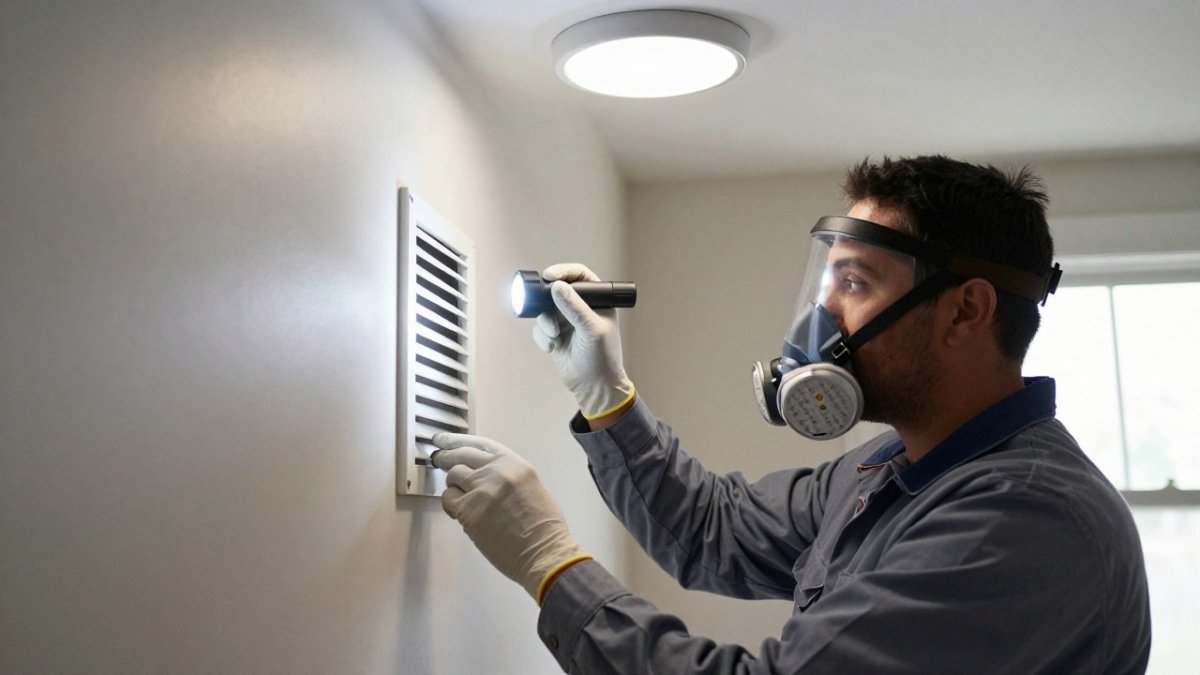
Small, surface-level mold near a vent can sometimes be cleaned by a careful homeowner. Growth inside ducts, on the coil, or on porous duct materials should be left to professionals.
Decide first: clean, hire, or leave it alone
Use this sequence before cleaning:
- Confirm it is mold, not dust or soot. Dust wipes away dry and leaves no fuzzy texture. Soot is dark and greasy and usually sits near the furnace. Mold looks fuzzy or powdery, feels damp, and often clusters where water collects. If you cannot tell, stop and have the system inspected.
- Check where the growth is. Growth only on the vent cover, register face, or the painted drywall around a register is a surface problem you may be able to clean. Growth inside the duct run, on the air handler cabinet interior, on the evaporator coil, or on duct insulation is a system problem. Read the benefits of professional duct cleaning to compare a DIY approach with a full service.
- Check the duct material. Rigid sheet metal can be cleaned and disinfected. Porous or internally lined duct board, flex duct with a fibrous liner, and any insulation that has stayed wet generally cannot be cleaned well enough to remove growth and should be replaced rather than surface-treated.
- Check the moisture source. If the area is still damp or the drain pan holds water, cleaning will not last. Fix the moisture first or the growth returns.
A common pattern is for a homeowner to clean a vent cover, see the growth return within weeks, and only then discover a clogged condensate line or a sweating duct behind the wall.
Safety precautions and when to stop a DIY cleaning
Turn off the system at the thermostat and the air handler disconnect before you start. Wear gloves, an N95 respirator or better, and eye protection. Keep the area ventilated and keep occupants, especially children, away from the work area.
Stop and call a professional if:
- The mold covers more than about 10 square feet, a threshold commonly used to distinguish small cleanup from remediation work (the EPA)
- Growth is inside the ducts, on the air handler coil, or on porous duct material
- Anyone in the home has asthma, allergies, or a weakened immune system
- The mold keeps coming back after cleaning
- You smell a musty odor throughout the house even after cleaning visible areas
Where a HEPA vacuum, rotary brush and EPA-registered disinfectant fit, and the limits of fogging
Work in this order:
- Vacuum loose debris. Use a HEPA-filtered vacuum so fine spores are not blown back into the air.
- Disinfect hard surfaces only. Use a disinfectant labeled for the surface and follow the label directions exactly. Do not brush porous materials.
- Avoid fogging. Fogging a disinfectant through ductwork does not remove growth or fix the moisture that feeds mold.
After cleaning: verify and prevent return
After cleaning, watch for returning growth or musty odor. If growth returns, the moisture source was likely not corrected.
Before cleaning, work through these checks to tell whether the growth is a surface problem you can handle or a system problem that needs a professional.
| Check | What to look for | Action |
|---|---|---|
| Confirm it is mold | Fuzzy or powdery, feels damp; dust wipes dry, soot is greasy | If unsure, have system inspected |
| Locate the growth | Vent cover or register face vs. duct run, coil, or air handler | Surface: clean; inside system: call a pro |
| Check duct material | Rigid sheet metal vs. porous duct board or wet insulation | Metal: clean; porous or wet: replace |
| Check moisture source | Damp area or standing water in drain pan | Fix moisture first or growth returns |
| Size of growth | More than about 10 square feet | Stop and call a professional |
HVAC Mold Removal Cost: What Affects the Price
The cost to remove mold from an HVAC system depends on how far the growth has spread, where it sits, and what caused it. Small surface cleaning costs far less than remediation inside ducts or on the coil. Pricing depends on the size of the system, the access needed, and whether the moisture source must also be repaired.
For a current estimate on your system, contact Valley View HVAC directly for a quote.
Booking a Mold Inspection and Duct Assessment With Valley View HVAC
Valley View HVAC is a family-run business with over 20 years of combined construction trades experience. The team is licensed, bonded, and insured, and holds CCB #243211 and EPA-2 certification.
If mold is growing in your ducts, a professional assessment can help identify the source. Schedule your complimentary consultation with Valley View HVAC to get started.
Frequently Asked Questions
What causes mold in an HVAC system?
Mold needs moisture, a food source and time. In HVAC systems the moisture usually comes from condensation on the evaporator coil, a clogged or misaligned condensate drain, a cracked drain pan, or humid air leaking into ducts through poorly sealed joints. Dust and debris on damp surfaces supply the food. Fixing the moisture source is what stops regrowth, so cleaning alone rarely solves a recurring problem.
What are the symptoms of mold in an HVAC system?
Common signs include a musty smell when the system starts, visible dark or fuzzy spots near supply registers or inside the air handler, water stains around the unit or drain pan, and household members who experience more sneezing, congestion or itchy eyes when the system runs. Dust and soot can look similar, so a closer inspection or a professional assessment is the reliable way to confirm mold.
How can I prevent mold from growing in my AC unit?
Keep indoor humidity at moderate levels, make sure the condensate drain flows freely, and have the evaporator coil and drain pan inspected during routine maintenance. Sealing visible duct leaks also helps reduce moisture entering the system.
When should I call a professional for HVAC mold remediation?
Call a professional if growth is inside the ducts or air handler, the system keeps growing mold after cleaning, or anyone in the home has asthma or a weakened immune system. Professionals can help assess the moisture source. For current information, contact Valley View HVAC directly.