 blog
Is It Cheaper to Run Heat Constantly or Use Setbacks?
Last Updated: November 15, 2026
Quick Summary
To run heat constantly is almost never cheaper than using setbacks. Letting the temperature drop for eight hours a day cuts heating bills, and turning the heat back up does not waste energy because the system works at the same efficiency either way. The exception is a heat pump in a mild climate paired with a poorly insulated house.
- Heat loss is proportional to the temperature difference between inside and outside, so a cooler house loses heat more slowly.
- Energy Star recommends a nighttime setback of 7-10°F while you sleep rather than turning the heat off entirely.
- A 10°F drop for eight hours can meaningfully cut run time for electric resistance baseboards and wall heaters.
- Heat pumps can run for hours at a time, and long run times are a sign of efficient operation, not a fault.
- Keep a floor of 55°F when you are away and check that pipes in exterior walls are insulated.
Table of Contents
- The Constant Heating Question, Answered Up Front
- Is It Cheaper to Keep the Heat On or Turn It On and Off?
- Setback vs. Constant: Side-by-Side Comparison
- Is It Better to Turn Heat Off or Down at Night?
- The Cost Difference Between 68 and 70 Degrees Heat
- How Long Can a Heat Pump Run Continuously?
- Matching the Strategy to Your Heating System
- Schedule a Heating Efficiency Check Before Winter
- Frequently Asked Questions
The Constant Heating Question, Answered Up Front
The short answer: to run heat constantly is almost never cheaper than using setbacks. This guide explains why, and where the "leave it on" advice still has a sliver of truth. In most homes, letting the temperature drop while you sleep or work saves more energy than holding a steady temperature all day. The exception is a specific setup: a heat pump paired with a poorly insulated house in a mild climate. Everywhere else, setbacks win.
Why the "Leave It On" Advice Persists
The idea survives because it contains a grain of truth. Older homes with stone or brick walls hold heat in their mass, and reheating those walls from scratch takes real energy. Some heating engineers still argue that a steady temperature protects the building fabric. That logic made sense for houses built before modern insulation. Today, the U.S. Department of Energy is blunt about it: Energy Saver guidance on thermostat setbacks recommends turning the thermostat down for eight hours a day to cut heating bills. The mass argument also ignores how most homes are actually built. For a rural property with different construction, our HVAC maintenance guide for rural Oregon homes covers how home type changes the advice.
Is It Cheaper to Keep the Heat On or Turn It On and Off?
It is cheaper to turn the heat down or off when you do not need it. The physics is simple: heat loss is proportional to the temperature difference between inside and outside. A cooler house loses heat more slowly, so the furnace or heat pump runs less. Turning the heat back up later does not "waste" energy, because the boiler or compressor works at the same efficiency either way. The only real cost of a setback is a slower recovery and a slightly cooler house on return.
Watch out: if your home has poor insulation, a long setback in freezing weather can let pipes in exterior walls drop toward freezing.
Setback vs. Constant: Side-by-Side Comparison
Here is how the two strategies stack up on the factors that actually decide your bill, with the mechanism behind each row rather than a bare verdict:
| Factor | Constant Heating | Setback Strategy |
|---|---|---|
| Energy use | Higher, steady demand; the system holds a fixed indoor temperature against a falling outdoor temperature | Lower, especially over 8+ hours; heat loss slows as the indoor-outdoor temperature difference shrinks |
| Recovery time | None | 20-60 minutes for most forced-air furnaces; 1-3 hours for boiler-and-radiator systems; heat pumps may take longer in cold weather |
| Comfort on return | Immediate | Brief cool period; a smart thermostat can start recovery before you arrive |
| Best for | Heat pumps in mild weather, or homes with very slow-recovering mass walls | Furnaces, boilers, electric resistance, any home left empty for work or sleep |
| Pipe freeze risk | Low | Manageable with a 55°F floor; higher risk in exterior-wall plumbing during hard freezes |
| Wear on system | More run hours but fewer starts | Slightly more cycling; modern equipment is designed for it |
| Humidity and condensation | Steadier indoor humidity | Longer cool periods can raise relative humidity and condensation risk on cold surfaces |
The trade-off is comfort versus cost, but the size of the cost difference depends on three variables: how long the setback lasts, how far the temperature drops, and how fast the house loses heat. In a leaky house, the savings shrink but rarely disappear because the physics still favors a cooler indoor temperature.
A transparent way to estimate the difference is to compare run time. If a furnace runs 30 minutes per hour to hold 70°F on a 30°F day, and a 10°F setback cuts that to roughly 20 minutes per hour during the setback window, the energy saved is proportional to the reduced run time minus the recovery burst.
Watch out: a side-by-side table can mislead if you compare a deep setback in a poorly insulated house to a shallow setback in a tight house. The right comparison is your home's heat-loss rate, not the thermostat number alone.
Is It Better to Turn Heat Off or Down at Night?
Turning the heat down at night beats turning it off entirely. A nighttime setback of 7-10°F while you sleep matches the recommendation from Energy Star's thermostat guidance and keeps the house from getting cold enough to cause condensation or pipe stress. Sleep in a cooler room and you save energy without a hard recovery in the morning.
Turning the system fully off is a different calculation. It works in mild weather and short absences. In a cold snap, a fully off furnace can let indoor temperatures fall far enough that walls and furniture stay cold for hours after you turn it back on.
The Cost Difference Between 68 and 70 Degrees Heat
Two degrees sounds trivial. It is not. Lowering the thermostat over an eight-hour period reduces heating energy use, and the savings add up over a heating season. The exact amount depends on your outdoor temperature, insulation, and local energy prices. The exact number depends on your outdoor temperature, insulation, and local energy prices, but the direction is consistent: lower indoor temperature means lower energy consumption.
In practice, 68°F is comfortable for many people in winter clothing, and 70°F feels warmer but costs more to hold.
How Long Can a Heat Pump Run Continuously?
A heat pump can run heat for hours at a time, and that is often normal. Unlike a furnace that cycles on and off, a heat pump is designed to modulate and hold a steady temperature, so long run times are a sign of efficient operation, not a fault. It only becomes a problem when the system runs nonstop and the house still will not reach the setpoint, which usually points to a refrigerant issue, a failing compressor, or a system that is undersized.
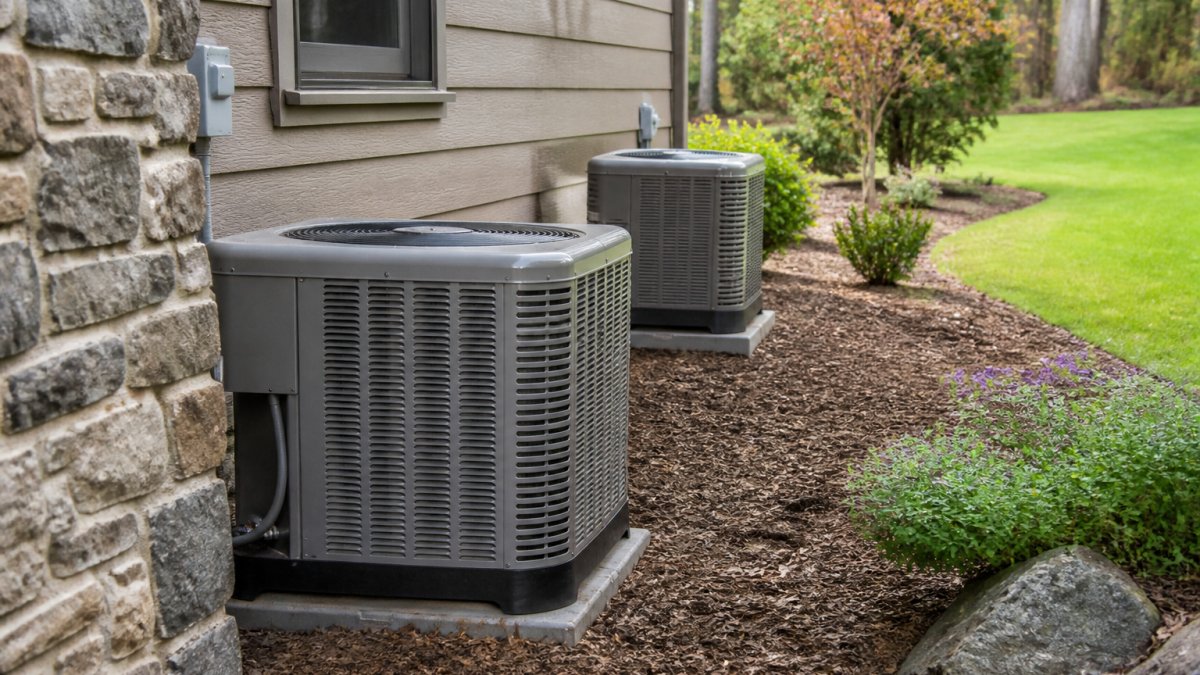
Cold-climate heat pumps handle this well, but they need correct sizing and a clean outdoor unit. If your heat pump in Corvallis runs flat out through a cold snap, have a technician check it rather than assume it is broken. You can book heat pump service in Corvallis to confirm the system is performing as designed.
Matching the Strategy to Your Heating System
The right setback depends on what is heating your home, how fast it recovers, and what happens to the building while it is cool. Treating all systems as interchangeable is the most common mistake in this debate.
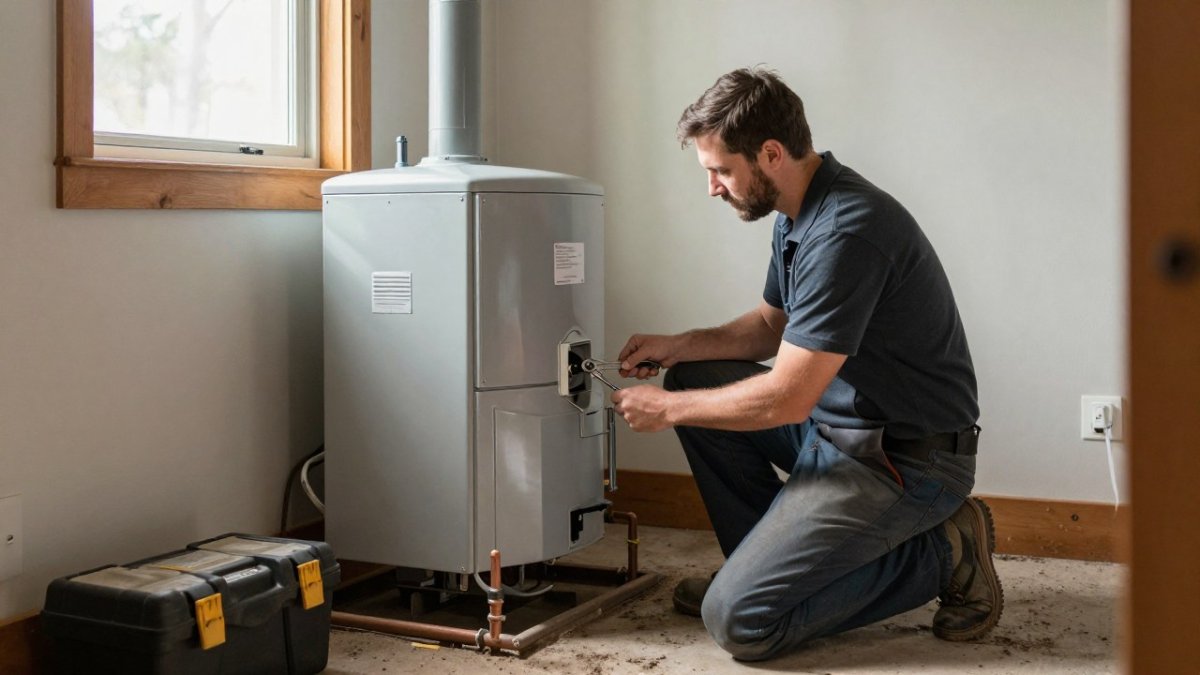
Gas furnaces recover fast because the heat exchanger reaches temperature quickly and the blower distributes warm air within minutes. A deeper setback is often workable with these systems, and a smart thermostat with a recovery ramp can help the house reach temperature before you wake up.
Boilers with radiators or baseboards are slower to warm because the water volume and cast iron or baseboard mass must heat before the room does. Keep setbacks modest and extend the recovery window.
Electric resistance baseboards and wall heaters are cheap to install but expensive to run because every kilowatt-hour becomes heat at a high price per BTU. Setbacks matter most here: a 10°F drop for eight hours can meaningfully cut run time, and there is no efficiency penalty for letting the room cool because resistance heat is essentially 100 percent efficient at the point of use.
Heat pumps are the one system where constant, low-level operation can make sense in mild weather, because a variable-speed compressor runs most efficiently when holding a steady temperature rather than ramping up hard from a deep setback.
Ductless mini-splits behave like heat pumps but zone by room. Set back only the rooms you are not using, and keep the compressor running at a low level in the main living area rather than shutting it off entirely, which forces a hard recovery and can cause the outdoor unit to defrost more often.
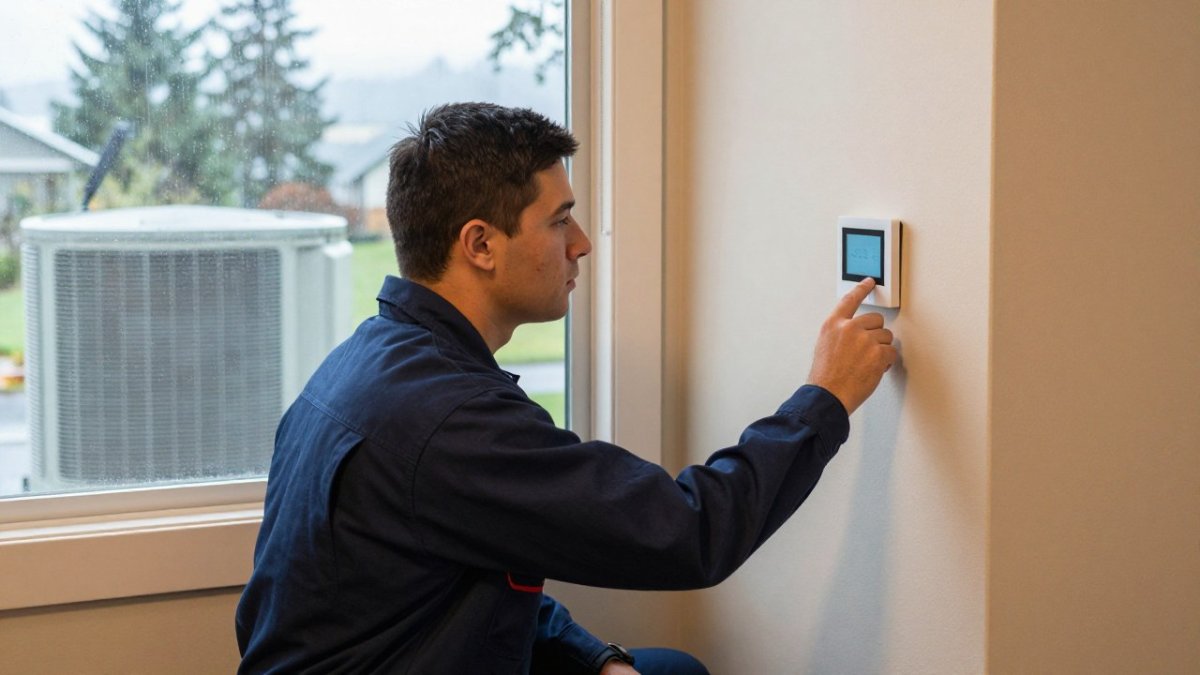
The man is American.
Beyond the equipment, two practical trade-offs decide whether a schedule works. Recovery time matters for routines: a house that takes two hours to warm from a deep setback needs the schedule to start earlier, and a smart thermostat's learning feature is only as good as the schedule you give it. Safety matters in cold snaps: keep a floor of 55°F when you are away, and check that pipes in exterior walls are insulated or have a path for warm air.
For homeowners with a heat pump, a local technician can tune the schedule to the system. You can schedule heat pump service in McMinnville to set it up correctly for the season.
Schedule a Heating Efficiency Check Before Winter
A healthy system supports lower heating costs, and a pre-winter check can catch problems such as dirty filters, low refrigerant, and failing components before they drive up bills. At Valley View HVAC, we size and service equipment for the Willamette Valley climate, back our work with a 2-year workmanship warranty, and offer community discounts for seniors, veterans, educators, and first responders. If you are on a fixed income, our guide to affordable HVAC service for seniors explains the options before you book. Veterans and educators can review HVAC repair options for veterans and educators as well.
Set your thermostat back, keep a 55°F floor in freezing weather, and get the system checked before the cold sets in. Valley View HVAC offers right-sized high-efficiency equipment, humidity-managing solutions, and emergency support during extreme weather. Get started with Valley View HVAC and schedule your complimentary consultation.
Frequently Asked Questions
Is it cheaper to leave the heat on all day or turn it off?
Turning the heat down or off when the house is empty usually costs less than heating it all day. Heat loss through walls, windows, and doors rises as the gap between indoor and outdoor temperature grows, so a cooler house loses heat more slowly. The exception is a heat pump in very cold weather, where a deep setback can trigger inefficient auxiliary heat during recovery. A modest setback generally saves energy on most systems.
Does it cost more to keep turning heat on and off?
No. A common myth says restarting a system burns more energy than leaving it running, but that was only true for some old electric resistance systems. Modern furnaces and heat pumps simply run longer during recovery without wasting fuel. The extra energy used to reheat the house is smaller than the energy saved during the off period. Frequent short cycles are worth avoiding for equipment wear, not for cost.
Is it better to turn the heat off or down at night?
Turn it down rather than off for most homes. A nighttime setback supports better sleep and reduces heating demand during the coldest hours. Dropping the thermostat too low can risk frozen pipes in an older, poorly insulated home during a hard freeze. A programmable or smart thermostat can handle the switch automatically so the house is warm again before you wake up.
How long can a heat pump run continuously?
A modern heat pump is designed to run for long stretches, often for long periods in cold weather, and continuous low-speed operation is normal for inverter-driven models. Long run times at low output are more efficient than short bursts at full power. If the unit runs nonstop for hours while the indoor temperature keeps falling, that points to a sizing, refrigerant, or defrost problem worth a professional diagnostic.