 Comparison
Is a HEPA Filter Worth the Cost? A Practical Review
Quick Summary
Is a HEPA filter worth the cost? It is often worth it when particles like pollen, pet dander, dust, or smoke are the concern, especially in a bedroom. It is less useful for odors or chemical fumes. A true HEPA filter removes at least 99.97% of particles measuring 0.3 microns.
- Check for "True HEPA" language, since HEPA-type filters are not tested to the same standard.
- Compare total three-year cost, including replacement filters and electricity, not just the purchase price.
- The bedroom is usually the best first place for a purifier because you spend many hours there.
- HEPA filtration does not remove gases or odors unless the unit includes activated carbon.
- Filtration works best alongside source control, such as reducing clutter and washing bedding in hot water.
Table of Contents
- What a HEPA Filter Actually Does
- How Much Does a HEPA Filter Cost?
- Air Purifier Advantages and Disadvantages
- Are Air Purifiers Worth It for Asthma and Allergies?
- Benefits of an Air Purifier in the Bedroom
- Who Should Skip a HEPA Filter and Who Should Buy One
- Getting a Quote for Your Home's Air Quality Needs
- Frequently Asked Questions
Is a HEPA Filter Worth the Cost? A Practical Review
Last Updated: November 19, 2026
What a HEPA Filter Actually Does
Is a HEPA filter worth the cost? For most homes, the answer depends on who lives there and what they're trying to filter out.
A HEPA filter is an air filter designed to capture very small airborne particles. A true HEPA filter removes at least 99.97% of particles measuring 0.3 microns, according to the U.S.
Pollen, pet dander, dust mite debris, and smoke particles all fall within the range these filters handle well. Gases and odors are a different problem, which we cover later.
True HEPA vs. HEPA-type filters
Not every filter labeled "HEPA" meets the standard. A true HEPA filter must pass testing against the 99.97% at 0.3 micron benchmark. HEPA-type or "HEPA-like" filters are marketed to resemble that performance but are not tested to the same standard.
Check the packaging or spec sheet for "True HEPA" language. If the product describes itself only as "HEPA-type" or "HEPA-style," it may capture less. Filter media density, pleat design, and sealing around the frame all affect real-world performance.
How Much Does a HEPA Filter Cost?
Pricing varies widely by manufacturer, filter size, and whether you buy a standalone unit or a whole-home system. Pricing for whole-home or installed systems depends on your home's layout and ductwork. For current pricing on your property, contact Valley View HVAC directly for a quote.
What we can say is that cost falls into two categories: the purchase price of the unit and the recurring cost of replacement filters. Most buyers focus on the first number and ignore the second, which is usually the larger number over the life of the unit.
Upfront purchase and replacement filter costs
A standalone portable purifier is the cheapest entry point. Portable HEPA units vary widely in price depending on capacity and features, and models that add activated carbon typically cost more.
Replacement filters are where many buyers get surprised. Replacement HEPA filters for portable units vary in price depending on brand and size, and manufacturers typically publish a recommended replacement interval.
When comparing quotes, ask whether the price includes the first set of filters and what the replacement filters cost per year.
Long-term total cost of ownership
The purchase price is only part of what you will pay. Total cost of ownership adds up the unit, the filters over its life, and the electricity to run the fan. A unit with a low sticker price and expensive filters can cost more over five years than a pricier model with cheap, widely available filters.
You can build a simple three-year estimate yourself with four inputs:
- Purchase price of the unit.
- Filter cost per replacement multiplied by the number of replacements per year (check the manufacturer's interval, then assume the shorter end if you run the unit continuously or live with pets or wildfire smoke).
- Electricity cost. Find the unit's rated wattage on its spec sheet or EnergyGuide label, multiply by the hours you expect to run it per day, divide by 1,000 to get kilowatt-hours, then multiply by your local electricity rate. A unit drawing 40 watts run 12 hours a day uses about 0.48 kWh per day; at a typical residential rate that is a few dollars a month, but a high-power unit running 24/7 adds up over three years.
- Any consumables such as pre-filters or carbon pellets, which are inexpensive but easy to forget.
Add those four lines and compare models on the three-year total, not the shelf price. The cheapest unit on the shelf is not always the cheapest to own, because proprietary filters and higher fan power can erase the upfront savings. Electricity use matters too: fans running continuously draw power, so check the unit's energy rating and look for a model with a certified energy-efficient fan setting. Building this simple estimate before you decide can help you compare models, and you can request a quote from Valley View HVAC to review the numbers against your home's layout.
What drives the price up or down
Three factors move the number most. First, filter standard and media: true HEPA media costs more than HEPA-type media, and units that add a carbon layer for gases cost more again. Second, airflow capacity: a unit rated for a large room needs a bigger fan and a larger filter, both of which raise purchase and replacement cost. Third, system type: a portable unit is cheaper to buy and install than a whole-home system, but a whole-home system treats every room at once and may reduce the number of portable units you need.
The purchase price is only part of the picture, so the article breaks the cost down into the main drivers and what each one changes.
| Cost driver | Effect on price | Note |
|---|---|---|
| Filter standard and media | True HEPA costs more than HEPA-type | Carbon layers add cost again |
| Airflow capacity | Larger rooms need bigger fans and filters | Match the unit to the room you treat |
| System type | Portable is cheaper than whole-home | Whole-home may replace several portable units |
| Replacement filters | Often the larger lifetime cost | Check price and interval before buying |
| Electricity use | Adds up over years of running | Check rated wattage on the spec sheet |
Air Purifier Advantages and Disadvantages
HEPA air purifiers offer clear benefits for particle removal, quiet operation in many models, and no need for ductwork. They are a practical choice for a single room or for people sensitive to airborne irritants.
The drawbacks are real. Portable units only treat the air in the room they sit in. Filters need regular replacement, and HEPA filtration does little for gases such as volatile organic compounds unless the unit also includes activated carbon.
Are Air Purifiers Worth It for Asthma and Allergies?
For many people with allergies or asthma, a HEPA purifier can reduce exposure to common triggers like pollen, dust mite debris, and pet dander. The American Lung Association guidance on indoor air quality recommends reducing indoor particle sources and using filtration as part of that approach. The key word is part: filtration removes particles that are already airborne, but it does not remove the source.
What HEPA actually removes, and what it does not
HEPA filtration is a particle tool. It captures pollen, pet dander, dust mite debris, mold spores, and smoke particles well.
Particle size adds a second layer of nuance. Fine particles (often discussed as PM2.5, particles about 2.5 microns and smaller) are the fraction most associated with respiratory irritation, and they are exactly what a true HEPA filter is designed to capture.
Room-specific ROI: where a purifier earns its cost
Whether a purifier is worth it depends heavily on the room. Where a purifier tends to be most useful:
- Bedroom: High value. Most people spend many hours there with the door closed, so a single well-matched unit can meaningfully lower overnight particle exposure. This is usually the best first purchase for allergy sufferers.
- Living room or open plan: Moderate value. Larger volume and more foot traffic mean you need a bigger unit or more than one, which raises cost. Match the unit's rated room size to the actual square footage and ceiling height.
- Kitchen: Low value for a standalone HEPA unit. Cooking generates particles and moisture quickly, and a range hood that vents outdoors addresses the source far more effectively than a portable purifier.
- Workshop or garage: Situational. HEPA helps with fine dust, but source capture at the tool is more effective and cheaper over time.
- Whole home: Highest cost, highest coverage. A whole-home system treats every room at once but costs considerably more upfront; it makes sense when multiple rooms are priorities or when a household member has significant respiratory sensitivity.
Results vary, and a purifier is one tool
A purifier is not a cure. Keeping bedrooms free of clutter, washing bedding in hot water, controlling humidity, and using a vacuum with a HEPA filter all contribute to better air.
For households weighing the cost, the practical test is this: if particle triggers are a real concern and you can place a correctly sized unit in the room where you spend the most time, the cost is usually justified.
Benefits of an Air Purifier in the Bedroom
The bedroom is often the best place to start, since most people spend many hours there with the door closed. A compact HEPA unit on a nightstand can run quietly overnight and keep fine particles from settling on bedding.
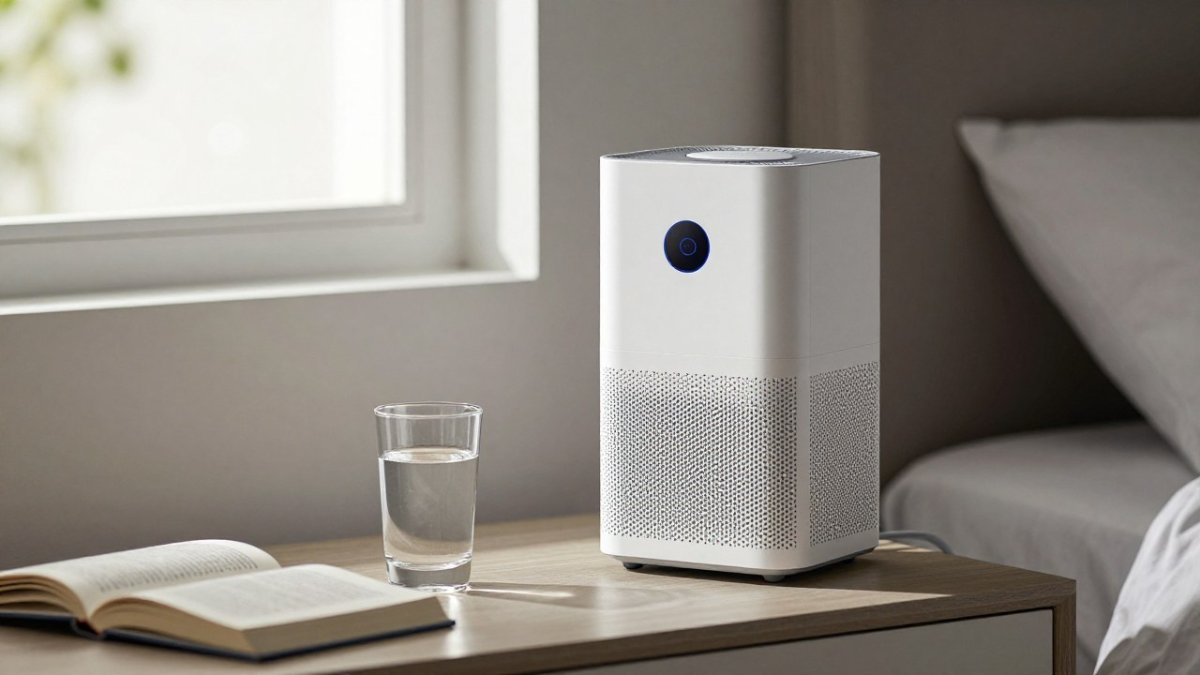
Choose a model with a low noise rating on its sleep setting, and place it away from the bed's headboard so air can circulate freely. For more ways to improve bedroom air, read our Willamette Valley indoor air quality guide. You can also see modern filtration and climate-appropriate options that suit different rooms.
Who Should Skip a HEPA Filter and Who Should Buy One
A HEPA filter is a strong fit if you have allergies, asthma, pets, or wildfire smoke exposure. Our Oregon-specific filtration guide compares options for these conditions. It is less useful if your main concern is odors or chemical fumes, where activated carbon or a combination unit performs better.
Households with no particle-related concerns and a well-maintained central HVAC system with a good filter may not need a standalone unit. In that case, upgrading the furnace filter to a higher-efficiency rating may do more for less money.
Getting a Quote for Your Home's Air Quality Needs
Every home has different ductwork, square footage, and air quality concerns, so the right answer is specific to your property. Valley View HVAC is a licensed, bonded, and insured HVAC contractor serving the Willamette Valley. Our team designs right-sized, high-efficiency systems and can assess whether whole-home filtration makes sense for your property. Request a quote.
If you want to start the conversation, you can request a consultation with Valley View HVAC.
Frequently Asked Questions
Do HEPA filters really make a difference?
Yes, for particles. True HEPA filters capture at least 99.97% of airborne particles 0.3 microns in size, which includes many dust, pollen, pet dander, and smoke particles. They do not remove gases or odors on their own, so a HEPA filter is most useful when you are targeting particulate matter. Results depend on room size, how often the unit runs, and whether doors and windows are kept closed. Check the stated clean air delivery rate for your room size before expecting a noticeable change.
How much should a HEPA filter cost?
Pricing depends on the unit's size, features, and whether you buy a standalone purifier or a whole-home filter for an existing system. Replacement filters are the recurring cost, and they vary by model and brand. Valley View HVAC does not publish standard prices, so for current pricing on whole-home options or replacement filters, contact Valley View HVAC directly for a quote. Compare the replacement filter cost per year against the unit's price when you evaluate the total cost.
Are air purifiers a waste of money?
They are a waste of money if the room has no particle problem, if the unit is undersized for the space, or if filters are never replaced. They are more likely to be worth it when someone in the home has allergies, asthma, or pet dander issues, or when wildfire smoke is a regular concern. Consider the replacement filter schedule as part of the cost, and make sure the unit's clean air delivery rate matches the room where it will run.
Are HEPA air purifiers worth it for asthma?
For many people with asthma, a HEPA air purifier can reduce exposure to common triggers such as dust mites, pet dander, pollen, and smoke particles. It will not treat asthma or replace prescribed medication, and it works best alongside other steps like controlling humidity and keeping bedding washed. Run the unit in the bedroom, and talk to your doctor about whether it fits your specific triggers.